Most homeowners come into a consultation knowing they want a hardwood floor, but not exactly which one. And that’s completely understandable — between wood species, colors, plank widths, and finishes, the number of combinations can feel overwhelming. After years of helping homeowners throughout Sylmar, Pacoima, and the rest of the San Fernando Valley narrow down these choices, I want to walk through how each decision actually affects the final look and feel of your home.
In this article: how wood species, color, plank width, and finish work together, plus practical guidance for choosing a hardwood floor that fits your home’s style and daily life.
Start With How the Room Is Used
Before talking about style at all, I always ask how a room actually functions day to day. A formal living room and a busy family kitchen call for different considerations, even if the homeowner’s aesthetic preferences are similar. Traffic level, sunlight exposure, and whether pets are part of the household all influence which hardwood floor options make the most sense.
Wood Species Sets the Foundation
Different wood species bring distinct grain patterns, hardness levels, and natural tones. Oak remains one of the most popular choices because of its durability and versatile grain, while species like maple offer a smoother, more subtle look. Hardness matters too — some species resist dents and wear better in high-traffic households than others.
Color Sets the Tone for the Whole Room
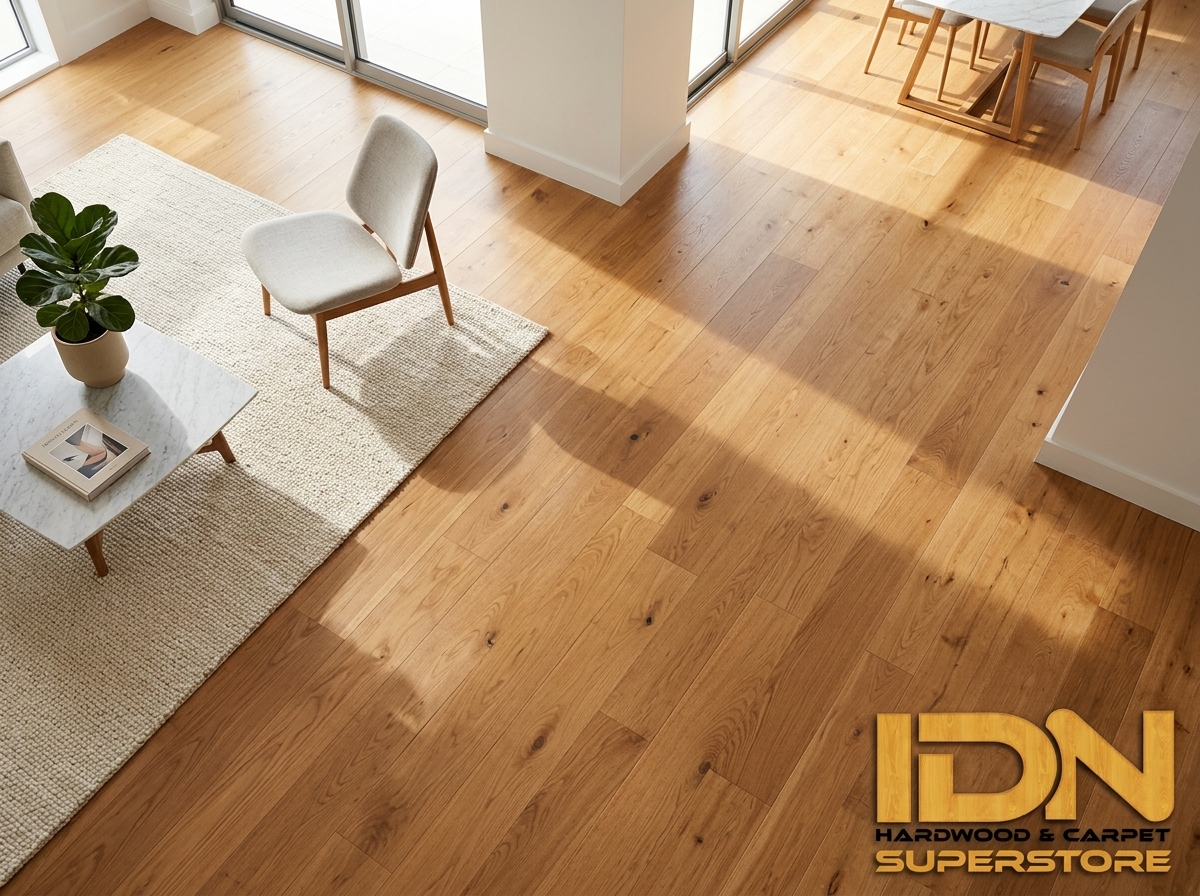
Lighter hardwood floor tones tend to make a room feel more open and airy, while darker stains create a warmer, more formal atmosphere. Neither is objectively better — it depends on your existing furniture, wall colors, and how much natural light the room receives throughout the day. We often bring larger samples into your actual space, since lighting at home can look very different from a showroom.
Plank Width Changes the Whole Feel
Narrower planks tend to read as more traditional or classic, while wider planks have become popular for a more modern, open feel. Wider planks can also make smaller rooms feel more spacious, since there are fewer seams breaking up the visual line of the floor.
Finish Affects Both Looks and Practicality
Glossy finishes highlight the natural richness of the wood grain but tend to show scratches and dust more easily. Matte or satin finishes are more forgiving with everyday wear, which is why we recommend them for busier households. This is one of those decisions where practicality and style genuinely need to work together, not compete.
Solid Hardwood or Engineered — Style Isn’t the Only Factor
Style aside, it’s worth remembering that solid hardwood and engineered hardwood perform differently depending on your subfloor and local climate conditions. Both can achieve nearly identical finished looks, so this decision often comes down to the specific conditions of your home rather than appearance alone.
How Local Homes Influence These Choices
Homes throughout Sylmar and Pacoima often feature a mix of older construction with more traditional layouts alongside newer additions and remodels. That mix means style preferences vary widely from house to house, which is exactly why we treat every hardwood floor consultation individually rather than pushing a single trending option on every homeowner.
Common Style Mistakes to Avoid
One mistake I see often is choosing a hardwood floor based purely on a photo online, without considering how the room’s actual lighting will affect the tone. Another is prioritizing trends over long-term satisfaction — a very dark, glossy floor might look striking in photos but can be harder to keep looking clean day to day. Taking home samples and living with them for a few days almost always leads to a better final decision.
The National Wood Flooring Association also notes that proper species selection and finish choice play a meaningful role in how a hardwood floor performs over its lifetime, not just how it looks on installation day.
Bringing It All Together
Choosing a hardwood floor really comes down to balancing four things: how the room is used, the wood species and its durability, the color and tone you want to live with, and the finish that fits your household’s pace of life. None of these decisions exist in isolation — they all work together to create the final result you’ll see and feel every day.
Frequently Asked Questions
What’s the most durable wood species for a hardwood floor?
Species like oak and hickory are generally known for their hardness and resistance to dents, making them popular choices for high-traffic homes.
Should I choose a light or dark hardwood floor?
It depends on your room’s natural light, existing decor, and personal style — we recommend testing large samples in your actual space before deciding.
Are wide-plank hardwood floors more expensive?
Wider planks can sometimes cost more due to material requirements, though pricing varies by species and finish as well.
Can I mix hardwood floor styles between rooms?
It’s possible, but we usually recommend maintaining some consistency, especially in open-concept homes, to keep the transition between rooms feeling intentional.
Find Your Perfect Hardwood Floor
If you’re in Sylmar, Pacoima, or anywhere in the San Fernando Valley and want help narrowing down species, color, and finish, we’re happy to guide you through the process. Request a free consultation, or visit our Canoga Park showroom on Google Maps to see and feel samples in person.
READ MORE: