
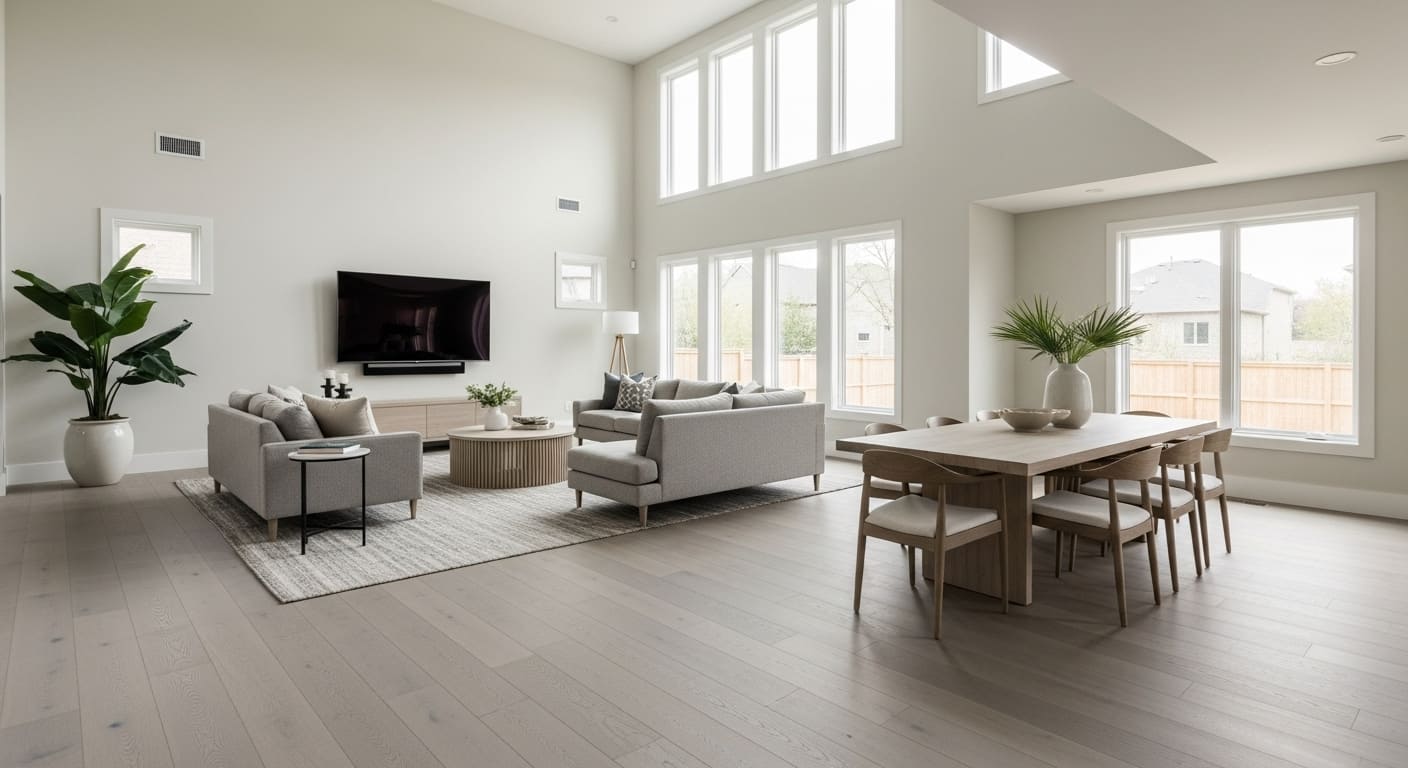
Looking at Engineered Hardwood Through an Environmental Lens
When we talk about sustainability in Canoga Park, we usually start with the basics: smart water use, energy efficiency to handle our summer heat, and materials that hold up so we don’t replace them often. Flooring plays a quiet but meaningful role in that conversation. Engineered hardwood has earned a reputation as a balanced option—bringing real-wood warmth while using resources efficiently and supporting healthy indoor air. Understanding its environmental profile helps Valley homeowners align personal style with responsible choices. If you’re just beginning to explore engineered hardwood, it’s worth seeing how the product is designed for both durability and resource mindfulness.
At its core, engineered hardwood uses a thinner wear layer of premium hardwood over a multi-layer substrate, usually made from fast-growing species or wood-based panels. That engineering extracts maximal visual value from slower-growing hardwoods while relying on more rapidly renewable layers for structure. In other words, you still enjoy the genuine grain and tone you love, but with a fraction of the hardwood volume required for a solid plank.
Material Efficiency and Forest Stewardship
Resource efficiency begins at the tree. Using a real-wood wear layer means fewer board-feet of prized species are needed to cover a home. The core layers can be sourced from plantation-grown or faster-growing woods, sometimes cross-laminated for strength. When manufacturers emphasize responsible forestry—think certified sourcing and documented chain-of-custody—you get a product that reduces pressure on slow-growth forests while maintaining quality.
In Canoga Park, this efficiency translates into tangible outcomes. A whole-house renovation that selects engineered over solid can represent a significant reduction in hardwood use without compromising the look or feel. That’s particularly meaningful when multiple rooms, stair treads, and matching trim are part of the plan. Multiply that by the number of renovations across the Valley, and the collective impact adds up.
Adhesives, Finishes, and Indoor Air Quality
The environmental conversation isn’t just about forests—it’s about the air you breathe at home. Modern engineered floors are built with low-emission adhesives and factory-cured finishes designed to minimize off-gassing. Independent emissions standards exist for a reason: they set thresholds that make interiors healthier for families, pets, and guests. With engineered hardwood, most of the finishing work happens in controlled factory settings, which reduces on-site solvents and shortens the time your home needs to air out after installation.
Indoor air quality is especially important in the Valley, where we seal up homes during heat waves and open them in temperate months. A floor that performs with low emissions in both scenarios is a practical win. Choose products that publish emissions data and stick with manufacturer-recommended cleaners so you preserve that healthy baseline throughout the floor’s life.
Longevity: The Sustainability Multiplier
Durability might be the most underappreciated environmental feature. The longer a floor lasts, the less often it’s replaced, and the lower the net environmental burden per year of service. Engineered hardwood’s stability in our climate guards against premature failure from seasonal movement. When paired with thoughtful maintenance—regular dust removal, prompt spill cleanup, and protective pads—you slow wear and protect the finish, extending the floor’s effective lifespan.
Many engineered products also offer a path to renewal. With a sufficiently thick wear layer, a professional sanding or a lighter screen-and-recoat can reset the clock on the finish. That option translates into decades of service from a single installation, spreading the initial environmental inputs over a long timeframe and reducing waste associated with frequent tear-outs.
Installation Practices That Reduce Waste
Waste isn’t just about what goes to the landfill; it includes wasted time, energy, and effort. Flat, well-prepared subfloors minimize cut waste. Accurate measurements ensure right-size orders and fewer leftover boxes. Floating installations in certain areas can make future repairs simpler and less invasive, while glue-down in the right zones keeps sound and feel consistent so you don’t chase callbacks. Each of these decisions supports a smoother project and less material in the dumpster.
For Canoga Park homes on slab, a proper vapor barrier prevents moisture-related failures that lead to premature replacement. On upper floors, acoustic underlayments can double as a buffer that limits sound transmission and provides a protective layer for the floor assembly. Good planning upstream is environmental stewardship too, because it prevents problems that would otherwise consume more materials later.
Transportation, Sourcing, and the Bigger Picture
Transportation is part of every material’s footprint. While flooring isn’t typically a locally harvested product in Southern California, engineered boards ship more efficiently than many bulky building components. The material efficiency at the core—less hardwood per square foot—also means less demand on long-haul shipping of slow-growth species. When you combine that with supply chains that emphasize responsible sourcing and verifiable emissions data, you arrive at a product profile that sits comfortably in a conscientious remodel.
Homeowners can make informed choices by asking a few key questions: where is the product made, what are the emissions certifications, and how is the wood sourced? Clear answers don’t just signal environmental performance; they correlate with quality control and predictability during installation and use.
Engineered Hardwood vs. Alternatives
Every flooring category has trade-offs. Solid hardwood is beautiful, but more sensitive to moisture movement. Tile is durable and inert but energy-intensive to produce and colder underfoot, often calling for more heating in winter. Vinyl options can be practical in wet rooms, but are petrochemical-derived and less repairable. Engineered hardwood occupies a middle ground: real-wood warmth, efficient use of hardwood resources, and a stable performance profile in our climate. That balance is why it earns a spot in environmentally minded projects that still want the soul of wood.
Comfort is part of sustainability, too. Floors that people love and care for are kept longer. Engineered hardwood’s tactile warmth and visual depth mean homeowners tend to maintain it diligently and delay replacement, reinforcing that longevity advantage.
End-of-Life and Circular Thinking
When a floor finally reaches the end of its service life, the question becomes: what next? Engineered boards can sometimes be reclaimed for small projects, wall treatments, or stair risers if the wear layer is in decent shape. While mixed-material products are more complex to recycle than single-species solids, the long lifespan of engineered hardwood offsets much of that drawback. Planning for longevity and potential reuse at the onset is a pragmatic approach in a world where perfect circularity is still emerging.
During renovations, careful removal and targeted repairs reduce waste. Holding onto a spare box of planks allows for future fixes without opening new orders, and it gives you the option to create matching thresholds or closet floors years later instead of landfilling mismatched materials.
Local Climate Realities and Energy Use
In the Valley, heat management is part of daily life. Floors that feel comfortable underfoot reduce the urge to overcondition the home. Engineered hardwood stays kinder in winter than tile and doesn’t store heat the way dense stone does. Paired with area rugs and good window management, it contributes to a cozy, energy-smart interior without aggressive HVAC cycles.
Compatibility with radiant heating—when installed to specification—adds another energy-aligned benefit. Radiant systems deliver comfort at lower air temperatures, and engineered planks’ stability helps preserve smooth performance over time. It’s a synergy that supports both comfort and efficiency, particularly in new ADUs or additions where systems can be designed holistically.
Practical Steps for Eco-Savvy Homeowners
If environmental impact sits high on your list, start with the specification. Ask for verified low-emission products, documented sourcing, and finishes designed for durability. Plan for long life by choosing timeless colors and widths that won’t feel dated. Maintain the floor with wood-safe cleaners and gentle routines. These simple choices compound into measurable benefits for your home and the broader environment.
In the middle of your research, remember that sustainability is a spectrum. You don’t need perfection to make a positive impact. By selecting engineered hardwood flooring thoughtfully and pairing it with solid installation and maintenance practices, you create a durable, healthy, and beautiful foundation that honors both your values and your day-to-day needs.
1. Is engineered hardwood a sustainable choice?
It can be. Material efficiency, responsible sourcing, low-emission adhesives and finishes, and long service life all contribute to a strong environmental profile. The key is choosing products with transparent documentation and supporting them with good installation and care.
2. Does engineered hardwood off-gas?
Quality products are built to meet stringent emissions standards, and factory-cured finishes minimize on-site off-gassing. Look for published emissions certifications and follow recommended cleaners to maintain healthy indoor air over time.
3. How long does engineered hardwood last?
With smart installation and routine care, engineered floors can serve for decades. Many can be refreshed with a professional screen-and-recoat, and some with thicker wear layers can be sanded and refinished, extending their useful life further.
4. Is engineered hardwood compatible with radiant heating?
Often, yes. The dimensional stability of engineered planks pairs well with radiant systems when installed according to the manufacturer’s guidelines. Consistent temperatures and moisture management are important for peak performance.
5. What’s the greenest way to maintain the floor?
Prevention beats correction: capture grit at entries, dry-dust regularly, and clean with a modest amount of wood-safe solution. Avoid harsh chemicals and excess water. These habits keep finishes intact longer, reducing the need for intensive interventions.
6. How do I dispose of or reuse old engineered flooring?
If planks are in decent condition, repurpose them for smaller projects or donate locally where appropriate. Where reuse isn’t feasible, consult local disposal guidelines. The best environmental choice, however, is to maximize service life to delay disposal as long as possible.
Ready to Choose a Floor That Aligns with Your Values?
If you want a home that feels warm, healthy, and responsibly built, engineered hardwood is a compelling option. Explore documented, low-emission products, pair them with thoughtful installation, and commit to easy, routine care. When you’re ready to take the next step, learn more about engineered hardwood flooring and how it can anchor an eco-minded renovation in Canoga Park.
Choose Sustainable Style for Your Home
Enhance your home’s elegance while caring for the planet with IDN Flooring’s eco-friendly engineered hardwood options. Our sustainable materials and responsible installation practices in Canoga Park CA help reduce environmental impact without compromising style. Contact us today to explore green flooring solutions that stand the test of time.