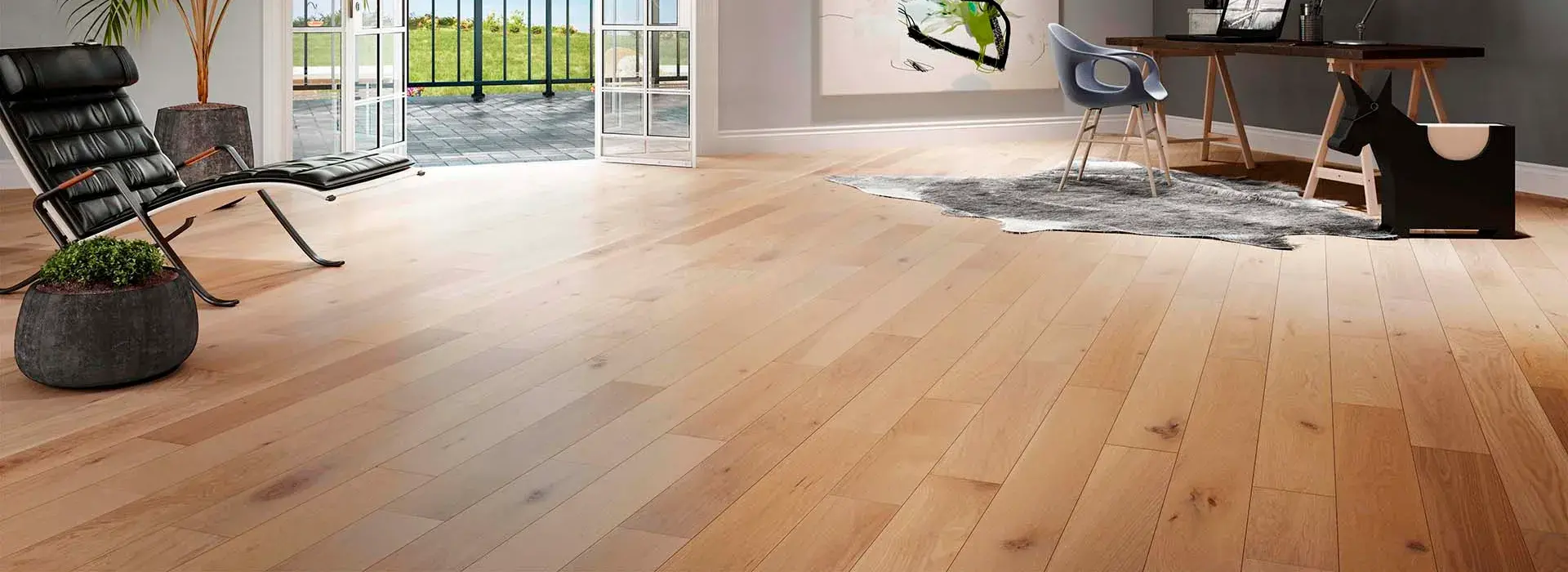
As a local flooring professional, I’ve installed and cared for hundreds of surfaces across Canoga Park, and I know homeowners want durable beauty without constant worry. From the moment you consider Hardwood Floor Installation to the years you enjoy a finished room, thoughtful choices and consistent care make all the difference. In this guide I’ll walk you through how climate, materials, installation techniques, and routine maintenance combine to keep your floors looking their best in our Southern California environment. For a hands-on approach backed by local experience, consider speaking with a pro about Hardwood Floor Installation early in your project.
Why hardwood performs well in Canoga Park
Canoga Park enjoys a generally mild climate with warm, dry summers and cooler, wetter winters. That pattern is kinder to wood than extreme humidity swings, but sun exposure and occasional moisture still create challenges. The right species and finish will resist cupping, fading, and excessive movement. Domestic oak and engineered options are popular because they balance stability and aesthetics; engineered planks handle slight seasonal changes better than solid wood in areas with variable indoor humidity. Orientation and sunlight control matter too: protecting floors from direct sun reduces long-term fading and finish degradation.
Hardwood Floor Installation Considerations
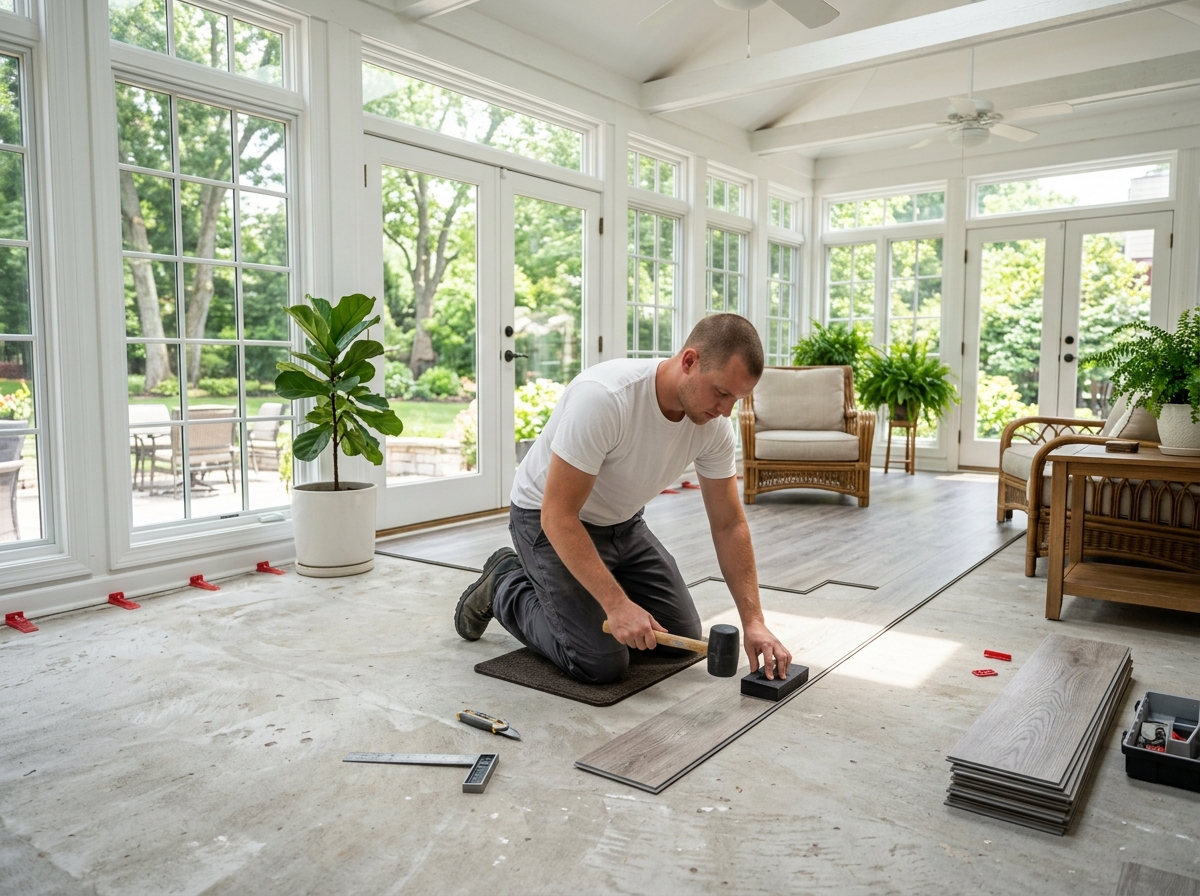
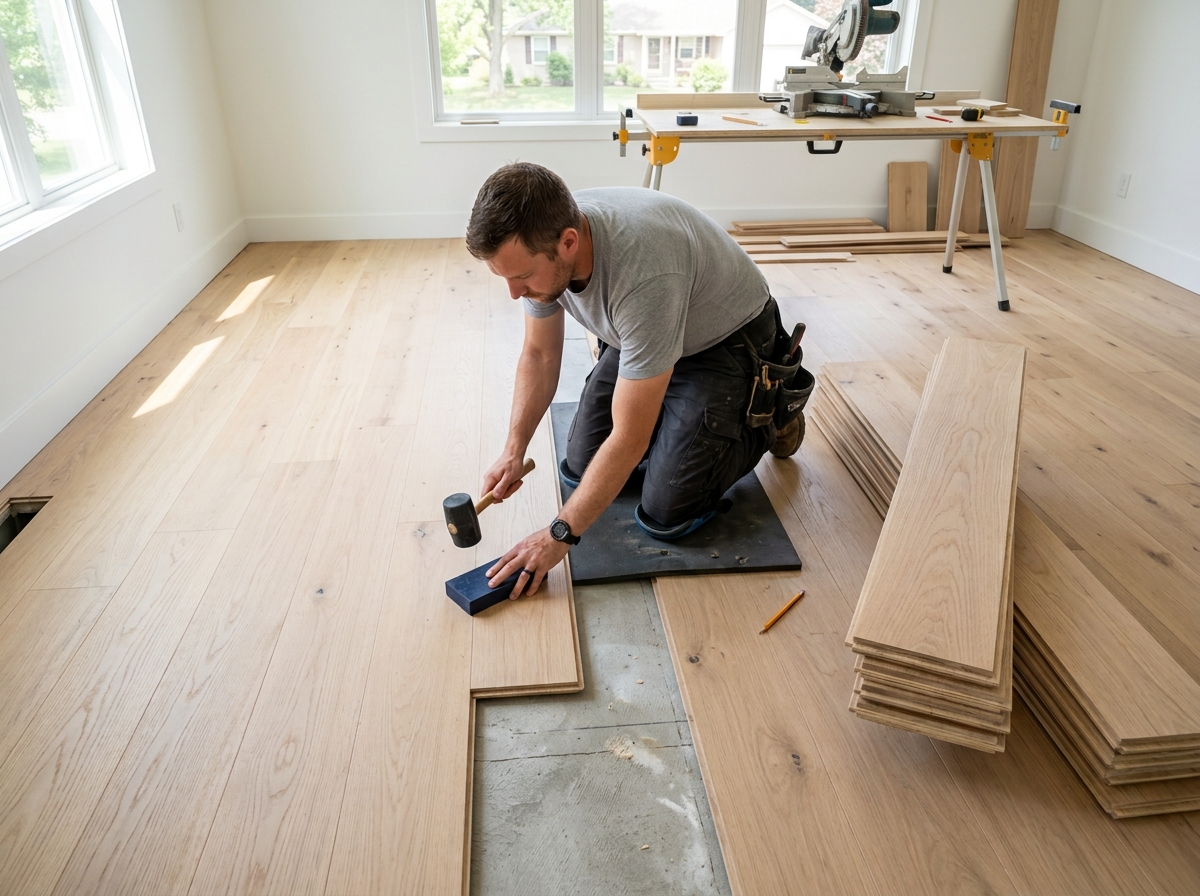
Successful installation starts with preparation. Subfloor flatness, moisture testing, and acclimation of the wood are non-negotiable steps I always emphasize to homeowners. A moisture meter reading guides whether a vapor barrier or specific underlayment is required, especially over concrete slabs. Proper acclimation—letting the boards rest in the conditioned space for several days—helps minimize later gaps or buckling. Nail-down, glue-down, or floating installations each have advantages; your subfloor, traffic patterns, and room layout will determine the best method. Precision during installation ensures fewer problems and a longer life for the floor.
Maintenance strategies for long-term performance
Once installed, maintenance is straightforward but must be consistent. Sweep or dry-mop frequently to remove grit that abrades finish. Use a damp mop with a cleaner formulated for wood—avoid saturated mops and steam cleaners that force moisture into seams. Area rugs in high-traffic zones and furniture pads under legs reduce wear and scratches. For homes with pets, keep nails trimmed and use matting at exterior doors to trap dirt. Seasonal checks are helpful: winter rains can elevate indoor humidity slightly, and summer dryness can open tiny gaps; spot-checking and adjusting a humidifier helps maintain a stable indoor environment.
Sunlight management is another key maintenance habit. Rotating rugs and blinds periodically evens out exposure, and UV-resistant window treatments or finishes can slow color changes. If you notice finish wear in concentrated areas, consider targeted recoating rather than a full refinish to extend life with less disruption. When spills occur, blot them promptly and avoid cleaners with harsh solvents that strip factory-applied finishes.
Refinishing, repairs, and when to call a pro
Refinishing restores color and smoothness but is not always necessary every few years; actual need depends on traffic and finish wear. Light recoating can refresh a floor with surface-level dulling, while deeper scratches or localized damage may require sanding and refinishing. Engineered floors with a thick wear layer can be sanded once or twice over their lifetime, whereas solid hardwood offers more flexibility for multiple refinishes. For complex repairs—such as replacing boards around fixed cabinetry or dealing with moisture-related damage—professional assessment ensures the correct approach and avoids common pitfalls.
Preventive maintenance also includes mindful household practices: avoid dragging heavy furniture, maintain consistent indoor humidity, and schedule periodic professional inspections if you have high foot traffic or pets. A small investment in maintenance now prevents larger, costlier repairs later and preserves the character of your home.
FAQ
Q: How often should I clean my hardwood floors?
A: Sweep or dry-mop several times a week in busy areas and damp-mop monthly or as needed with a manufacturer-recommended cleaner. Avoid excessive water and never use steam cleaning on finished wood.
Q: Can hardwood be installed in kitchens and bathrooms?
A: Kitchens are commonly finished with hardwood when spills are managed promptly and protective finishes are used. Full bathrooms are riskier due to standing water; engineered wood with a durable finish and careful sealing is a better option if you choose real wood in moisture-prone spaces.
Q: How does Canoga Park’s climate affect my floors?
A: Our local climate is relatively mild, which reduces dramatic wood movement, but UV exposure and occasional moisture can still impact color and finish. Proper acclimation, installation, and shade control are important to reduce those effects.
Q: When should I refinish my floors?
A: Consider refinishing when the finish is worn through in high-traffic paths, scratches are deep, or staining is widespread. Light recoating can address dullness; sanding and refinishing are needed for more extensive wear.
If you’re planning a remodel or want personalized guidance for your home, I’m happy to help. For local projects I recommend getting an on-site assessment to determine the best materials and care plan. When you’re ready to move forward with professional Hardwood Floor Installation, choose experienced installers familiar with Canoga Park’s specific conditions—proper installation saves time and preserves beauty for years. Reach out to discuss species selection, acclimation, and maintenance strategies so your floors perform and impress for the long term.
IDN Hardwood and Carpet Superstore
7947 Canoga Ave, Canoga Park, CA 91304, United States
Phone: +1 (818) 888-8051