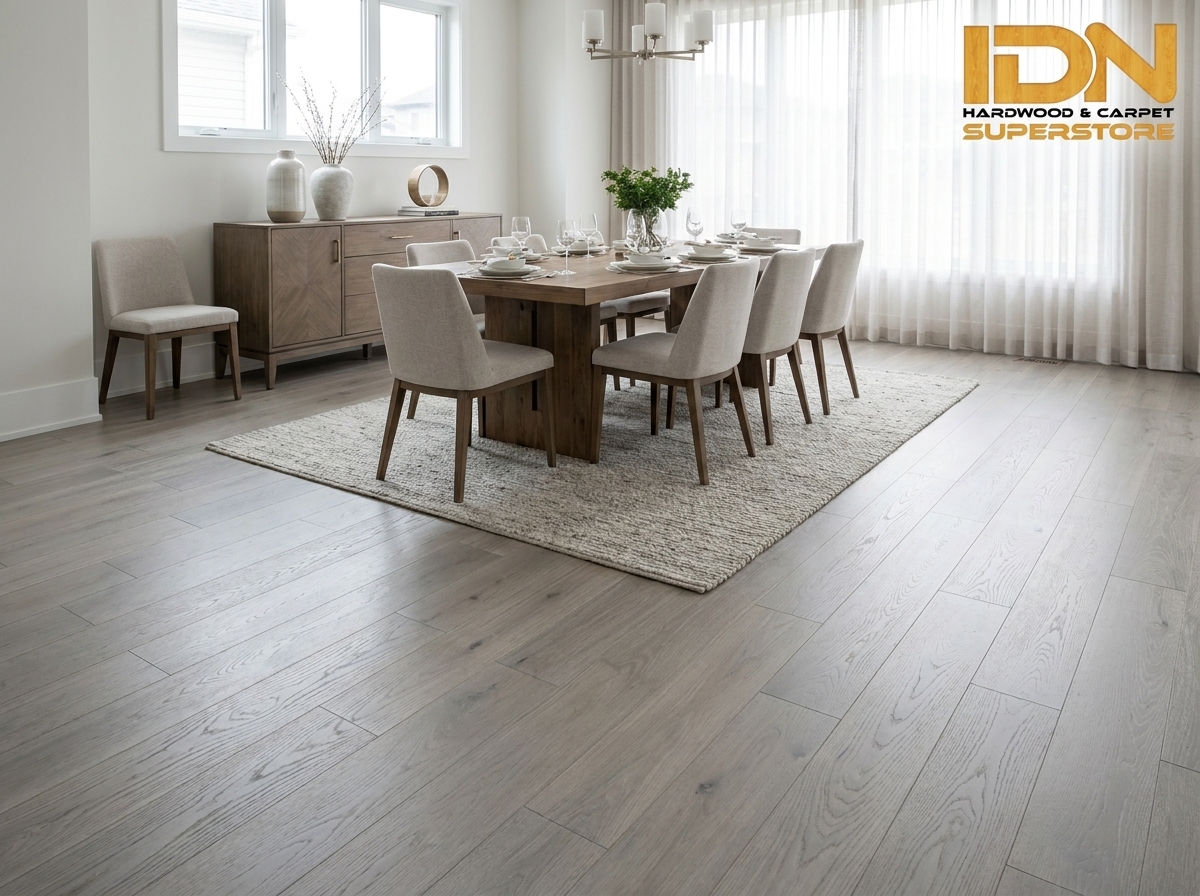
Wide, long planks have become one of the most requested looks in the homes I visit, and I understand why. Fewer seams, a calmer visual line, and more of the wood’s natural character on display. The interesting thing is that engineered hardwood flooring is often the better way to get that look. Here is what I tell homeowners in Woodland Hills, Tarzana, and across the Valley when they are drawn to wide planks.
In this article: why wide planks work well in engineered wood, the trade-offs to understand, and how to choose width and length for your room.
Why Engineered Wood Suits Wide Planks
Solid wood moves with humidity, and the wider the board, the more noticeable that movement can be. Engineered construction layers the core in alternating directions, which makes the plank more stable. That is why wider and longer engineered boards are available that would be risky in solid wood. You get the dramatic look with added dimensional stability.
What “Wide” Really Means
Traditional hardwood planks are often a few inches wide. Wide-plank products are commonly five inches or more, and some go considerably wider. Length matters too. Long boards create an uninterrupted look, especially in open spaces. When you compare options, ask for the width, length, and thickness of the wear layer, since all three affect appearance and performance.
Match the Plank to the Room
Very wide planks can make a large, open room feel clean and spacious. In a small room they can sometimes feel oversized. A medium-wide plank may be the sweet spot for many homes. We often suggest laying large samples on your floor to judge the scale in person.
The Subfloor Has to Be Flat
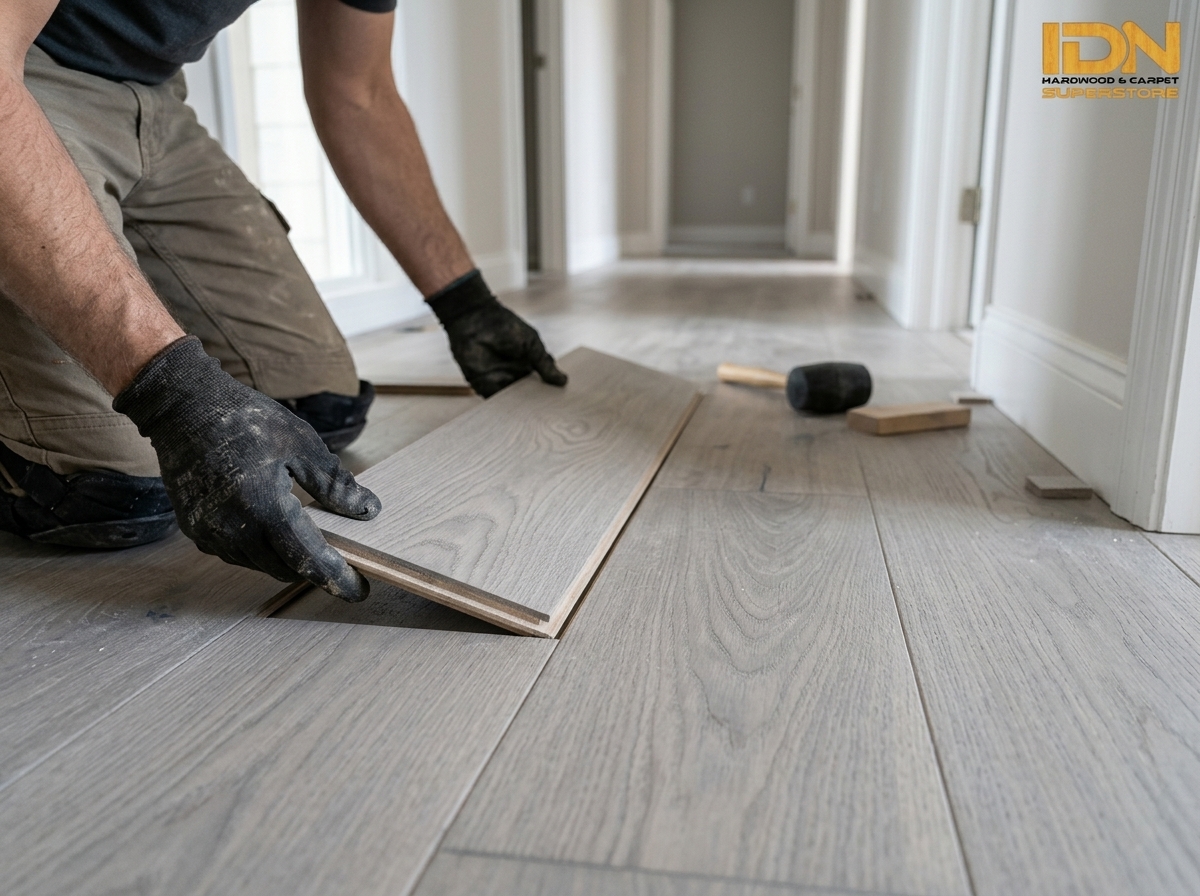
This is the trade-off people do not hear enough. Wider and longer boards show subfloor imperfections more, because there are fewer joints to follow the surface. Flatness requirements matter even more with big planks. Preparation is not optional, and it is where we spend real time on every hardwood floor installation.
Expect Some Character
Wider boards display more of the grain, knots, and tonal variation of the wood. That is part of the appeal, but it also means each board looks a little different. The National Wood Flooring Association notes that natural variation in color and grain is a characteristic of wood flooring, not a defect. If you prefer a more uniform look, tell us, and we will show you the right options.
Check the Wear Layer
The thickness of the top hardwood layer determines how many times, if at all, the floor can be sanded and refinished. A thicker wear layer gives you more flexibility down the road. It is worth asking about, especially if you plan to stay in your home for a long time.
Cost Considerations
Wide and long planks can cost more than standard widths because of the material and the attention they require during installation. Pricing varies widely by product, so it helps to compare a few options in person.
Serving Woodland Hills, Tarzana, and the Surrounding Valley
Many of the open floor plans we see in Woodland Hills and Tarzana suit wide-plank flooring beautifully. To learn more about the material, visit our engineered hardwood page or our service area page for the full list of communities.
Frequently Asked Questions
Is wide-plank engineered hardwood stable?
Its layered construction makes it more stable than solid wood in wide widths, though proper installation still matters.
Do wide planks show scratches more?
Scratch visibility depends mostly on species, finish, and texture rather than plank width.
Can wide-plank engineered wood be refinished?
It depends on the thickness of the wear layer. Ask about it before purchasing.
Do wide planks work in small rooms?
They can, but scale matters. We recommend testing large samples in the actual space.
See Wide-Plank Samples in Person
Come compare widths, tones, and finishes side by side. Request a free consultation or visit our Canoga Park showroom on Google Maps.