Not every damaged hardwood floor needs to be torn out. Sometimes the problem is one stained area, a section where a wall used to be, or a spot where a pet or a leak did its damage. In those cases, repair or lacing can save the floor you already love. After seeing many homes in Westlake Village, Agoura Hills, and nearby communities, I want to explain how repair works and when it is the right call.
In this article: what lacing is, which problems repair can solve, and the situations where replacement is the better answer.
What Is Hardwood Floor Lacing?
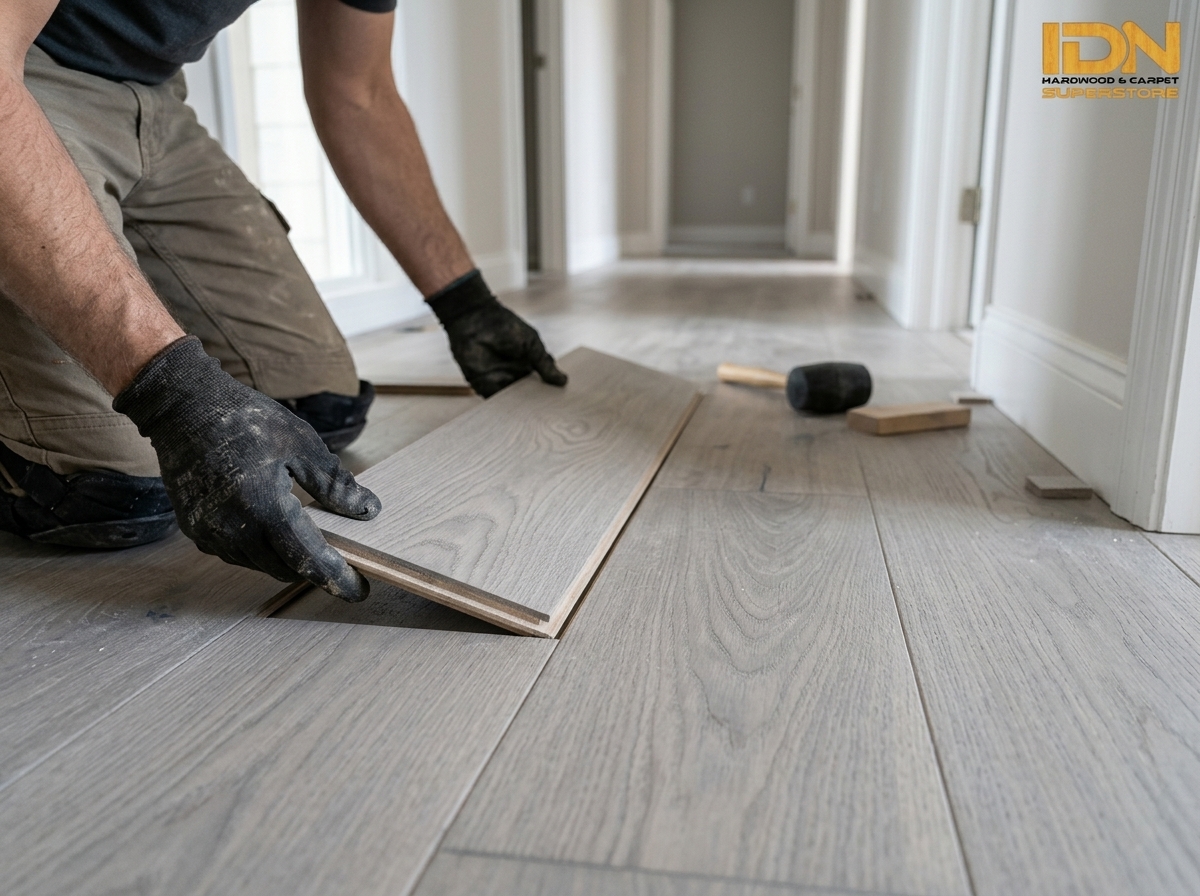
Lacing, sometimes called weaving or blending, means installing new boards into an existing hardwood floor so the repair disappears. The new boards are interlocked with the old ones, and then the whole area is sanded and finished so it all looks like one floor. It is a skilled job, and when done well it is very hard to notice.
Common Reasons for Repair
Homeowners usually call about one of these situations:
Removed walls or openings. A remodel leaves a gap where a wall once stood. Lacing fills that gap so the floor flows through.
Water damage in one spot. A leak from a dishwasher or a pipe can damage a limited area.
Pet stains and damage. Localized stains that do not come out with refinishing may need board replacement.
Old vents or fixtures. Removing a floor vent or a built-in leaves a hole that needs to be patched.
Individual damaged boards. Deep gouges, cracks, or failed boards can be swapped out.
What Makes a Good Repair
Matching is everything. The new boards need to be the same species, width, and thickness as the old ones, or close enough to blend. Older floors can be hard to match because wood changes color with age and exposure. We often source similar material and blend the tones during finishing. In some cases, a different approach, like adding an inlay or border, looks better than trying to hide the repair.
Fix the Cause First
Before replacing boards, we find out why they failed. If moisture caused the damage, the source must be fixed and the area must dry out, or the new boards will suffer the same fate. The National Wood Flooring Association emphasizes that moisture problems should be identified and corrected before repairs or installation. We test and look for the source before any new wood goes in.
Refinishing Often Follows Repair
Because new wood and old wood take finish differently, the repaired area is usually sanded and finished together with the surrounding floor. This is what makes the repair blend. Plan for that as part of the project.
When Replacement Is the Better Choice
If damage covers most of the floor, if the boards have been sanded too many times to refinish again, or if the subfloor itself is compromised, replacing the floor is a more honest answer than patching it. We would rather tell you that than sell you a repair that will not last. If you reach that point, our hardwood floor installation page explains what a new floor involves.
Serving Westlake Village, Agoura Hills, and the Surrounding Area
We provide hardwood floor repair for homeowners in Westlake Village and Agoura Hills, along with other areas on our service area page. Learn more about our hardwood floor services.
Frequently Asked Questions
Will lacing be visible?
A well-done repair blends in. Matching and finishing determine how invisible it looks.
Can you match my old hardwood?
Often we can get close. Older floors are harder to match, and we will be honest about what is realistic.
How long does a repair take?
It depends on the size of the area, plus time for sanding and finishing.
Is repair cheaper than replacement?
Usually, when the damage is localized. For widespread damage, replacement may be more sensible.
Get an Honest Assessment
Send us photos or stop by for a look. Request a free consultation or visit our Canoga Park showroom on Google Maps.