Temperature changes luxury vinyl plank flooring goes through in the San Fernando Valley make every plank expand in heat and shrink in cooler air, so a floor without room to move can peak, gap or buckle. Ignore that, and small ridges and separating seams quietly grow until planks lift or locking joints break.
Does vinyl plank flooring really expand and contract with temperature?
Yes. Luxury vinyl plank is built mostly from PVC, a plastic that grows slightly as it warms and shrinks as it cools. One plank barely changes. A whole room of locked planks acts like one wide sheet, though, and the movement adds up across its width and length.
Think of it as a long ruler made of many short pieces clicked together. Each piece moves a hair, and the ruler as a whole moves a noticeable amount. This is why manufacturers publish installation rules about temperature, spacing and room size. The plank moves. Your installation has to allow for it.
Why is the San Fernando Valley harder on vinyl floors than the coast?
The Valley sits inland, behind the hills, so it swings between hotter days and cooler nights more than areas near the ocean. Summer heat inside a closed-up house can climb well above the room temperature the floor was installed at, then drop again once evenings cool or the air conditioning runs.
Let’s look at what that means for a floor in Canoga Park, Woodland Hills, Reseda or Northridge. First, a house left shut while the owners travel can get very warm, and the floor expands. Then the AC returns and the floor contracts. Repeated over seasons, that cycle tests every seam and every edge. Even in late autumn, bright afternoons and cool nights keep the pattern going. Inland homes simply ask more of the floor.
What happens when vinyl planks have no room to expand?
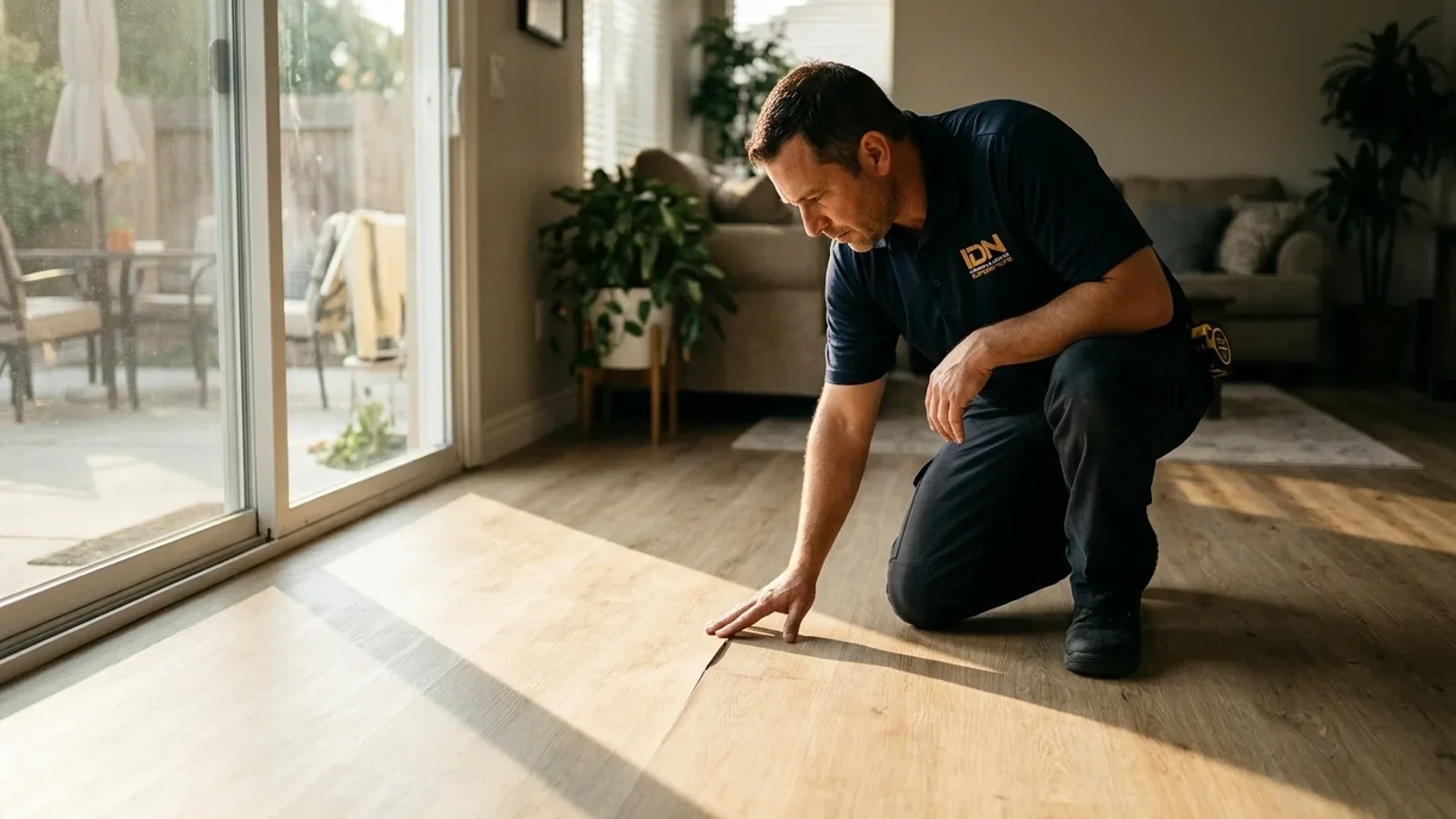
When a floating vinyl floor is pinned at its edges, the expanding planks push against each other and the only way out is up. The result is peaking at seams, a soft dome in the middle of a room, or planks that lift and click loudly underfoot.
Common pinch points include baseboards fastened down through the floor, heavy built-in cabinets or kitchen islands set on top of the planks, and tight door jambs or tile edges with no gap. In each case the floor cannot slide. Pressure builds during hot spells, and the locking joints take the strain. Joints are the weak link here. Once a locking profile cracks, that seam rarely closes the same way again.
How big should the expansion gap be for luxury vinyl plank?
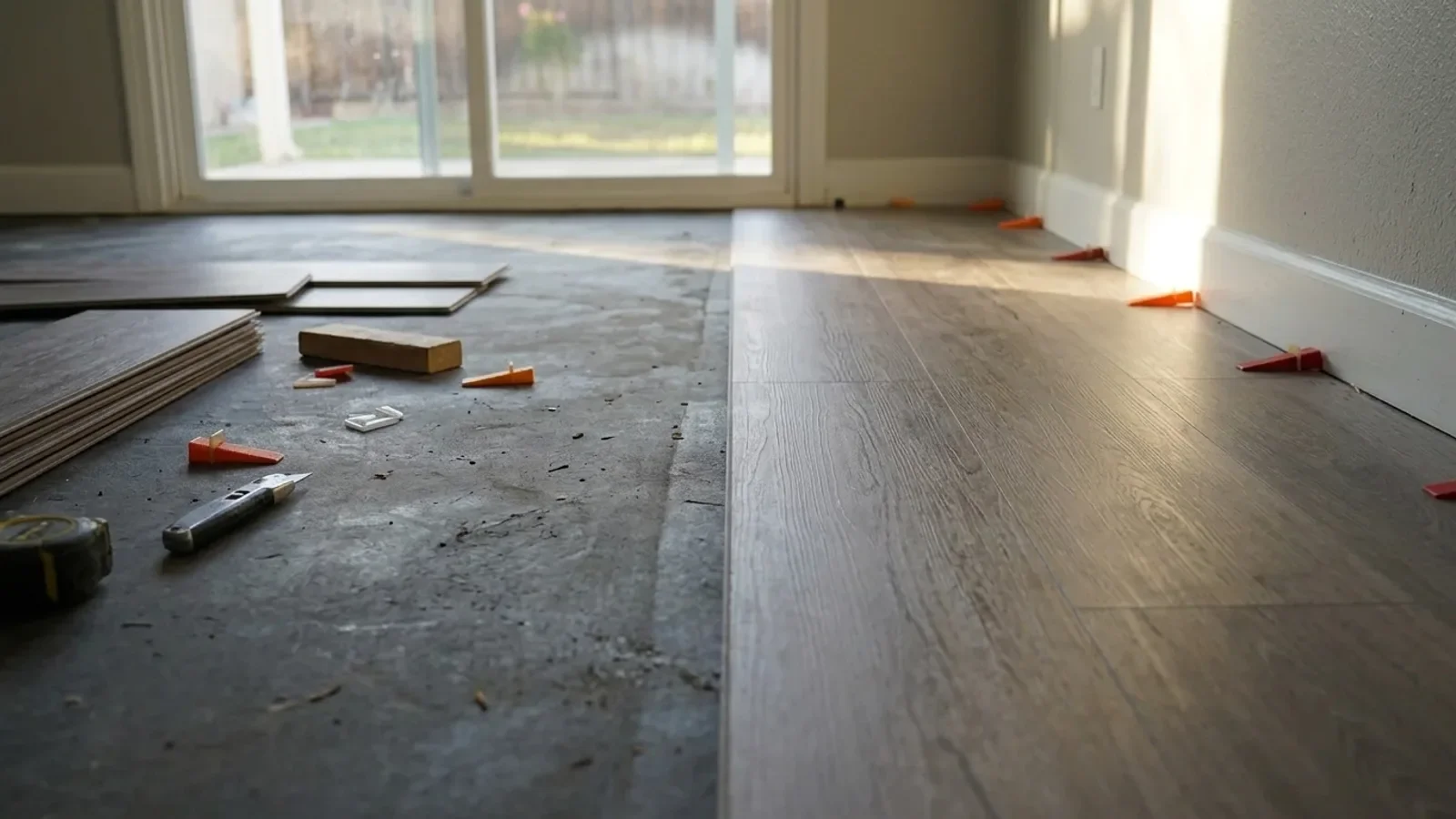
The correct perimeter gap is whatever the specific product’s manufacturer states, and it varies by brand, plank thickness and room size. Many floating products call for a gap hidden under baseboard or quarter round, plus transition breaks in large or long runs.
This is the core of many waterproof vinyl flooring installation mistakes: a gap that is skipped, guessed at or later filled in. Caulk, grout or tightly fitted trim in that space defeats its purpose, because the space has to stay open for the floor to move. Large open floor plans add another layer. Some products set a maximum continuous run before a transition is needed. Read the instructions first. Then follow them exactly.
Can direct sunlight through windows damage vinyl floors?
Yes, strong direct sun can heat a section of vinyl far beyond the rest of the room, and that uneven heat can cause local expansion, gapping as it cools, and fading over time. Large sliding doors and west-facing windows, common in Valley ranch homes, are the usual culprits.
Here is how it plays out. A patch of floor by the patio door bakes all afternoon while the shaded side of the room stays cooler. The hot area grows, pushes on its neighbours, and then shrinks at night. Some manufacturers specifically recommend window coverings or limit use in rooms with intense sun exposure. Blinds, shades, or UV-reducing window film can help keep that patch closer to the rest of the room. Shade is cheap protection.
Why does my vinyl floor have gaps in winter but look fine in summer?
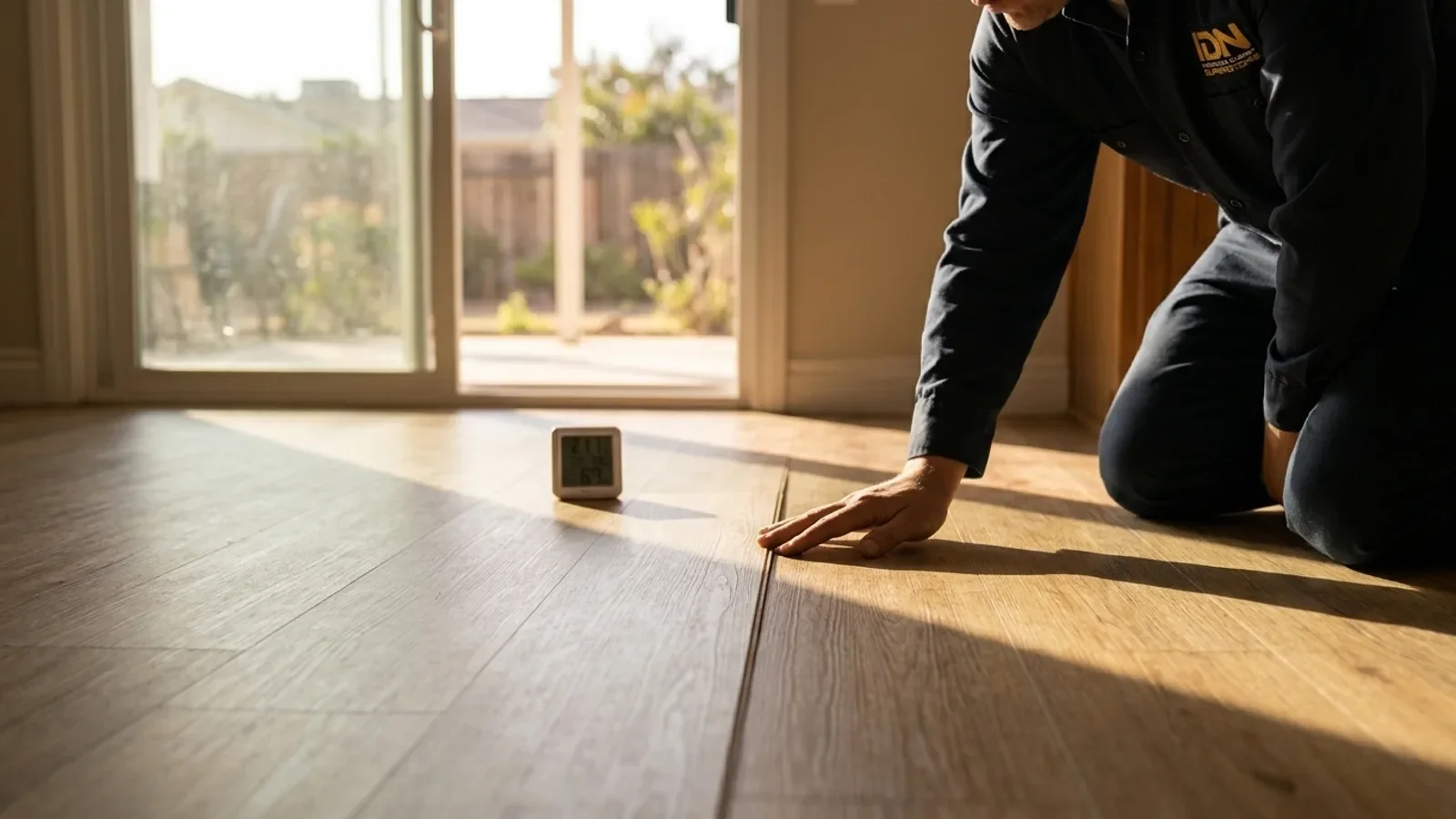
Seasonal gaps usually mean the floor was locked or held tight when it was warm, so it shrinks away from itself as the house cools. In milder Valley winters this is often subtle, a thin dark line at end joints or along one wall.
Several things can cause it. The planks might not have been acclimated before installation, or they were laid on a hot day in an unconditioned house. Heavy furniture can also anchor one area while the rest of the floor contracts toward it. Small, even gaps that close again in warmer weather are often normal movement. Gaps that keep widening, or joints that no longer lock, deserve a closer look. For a side-by-side list of warning symptoms, see the signs a vinyl plank floor is failing.
Does the subfloor change how heat affects a vinyl plank floor?
Yes, because the subfloor stores and passes along heat and moisture, and an uneven subfloor makes temperature movement more damaging. Many Valley homes are built on concrete slabs, which stay cooler than the air in summer and can hold moisture from below.
Let’s break that down. First, a slab that is not flat leaves hollow spots under the planks. When the floor expands, those spots flex more, and locking joints wear faster. Then there is moisture. Waterproof planks resist water from above, but vapor rising through concrete can still affect underlayment and adhesives. This is why flatness checks and a suitable vapor barrier matter before the first plank goes down. For more on slab preparation, read how concrete subfloors are prepared for vinyl plank. A flat base moves gracefully.
How can I protect temperature changes luxury vinyl plank flooring will face in my home?
Keep the indoor climate reasonably steady, protect sunny spots, and avoid trapping the floor’s edges. Those three habits reduce the stress that heat cycling places on any vinyl floor.
- Avoid letting a closed house overheat for long stretches. A modest thermostat setting while you are away helps.
- Use blinds, curtains or window film on strongly sunlit glass.
- Keep trim, door stops and transitions from being nailed or glued tight against the planks.
- Use felt pads and furniture cups so heavy items do not dig in or pin the floor.
- Do not place heavy fixed cabinets on top of a floating floor unless the product allows it.
None of these are dramatic. Together, they keep movement even. For routine cleaning and wear habits, see everyday care for waterproof vinyl floors.
What makes San Fernando Valley homes a particular test for vinyl
Valley homes combine inland heat, cool nights, sunny exposures and a large share of slab-on-grade construction, so vinyl floors here deal with several stresses at once. Older ranch-style houses can also have slabs that settled over decades, which makes flatness harder to achieve.
Remodels add their own wrinkles. Kitchen islands, new baseboards and wide open layouts are often planned around the look of the floor rather than its movement. Rules on permits and building work vary by city and project type, so check local requirements or ask a licensed professional before major changes. In short, the climate is manageable when the installation respects it. Learning which installation errors to avoid in Valley homes is a good place to start.
If your vinyl floor is peaking, gapping or you are planning a new one, reach out to IDN Hardwood and Carpet Superstore in Canoga Park and talk through your vinyl flooring plans with our team.