Homeowners spend hours comparing colors and plank styles, and almost no time asking about what goes underneath. That is a missed opportunity, because underlayment has a real effect on how laminate flooring sounds, feels, and lasts. After working with homeowners in Porter Ranch, Granada Hills, and nearby hillside neighborhoods, I can tell you it is one of the quietest decisions in a project and one of the most important.
In this article: what underlayment does, how it changes sound and comfort in multi-level homes, when you need a moisture barrier, and what to ask about the product itself.
What Underlayment Actually Does
Laminate is usually installed as a floating floor, which means it rests on a thin layer between the planks and your subfloor. That layer cushions the floor, reduces noise, helps smooth minor subfloor imperfections, and, depending on the product, can act as a moisture barrier. Skipping it, or choosing the wrong one, can leave you with a floor that sounds hollow and feels harsh underfoot.
Sound Matters in Multi-Level Homes
Many homes in Porter Ranch and Granada Hills have second stories, and hard flooring above a living space can carry footsteps downstairs. A good underlayment dampens that impact noise and also softens the hollow, clicking sound some people notice with floating floors. If you have bedrooms above a family room, this is worth discussing before you choose. Some buildings also have sound-control requirements, so check any rules that apply to your home.
Comfort Underfoot
A little cushioning goes a long way. Underlayment gives laminate a more solid, less brittle feel when you walk across it, which you will notice most in rooms where you stand or walk a lot, like kitchens and hallways.
Moisture Barriers on Concrete
When laminate goes over a concrete slab, moisture can rise through the concrete. In that situation we use an underlayment with a vapor barrier or add a separate one, based on the product’s requirements and the slab’s condition. Moisture testing comes first. Our flooring installation process always includes evaluating the subfloor before choosing materials.
Built-In Pad or Separate Underlayment?
Some laminate comes with a pad already attached to each plank. Others require a separate underlayment. Neither is automatically better, but you must follow what the manufacturer specifies, since using the wrong combination can void a warranty. Ask which approach your product uses and why.
Smoothing Out Subfloor Imperfections
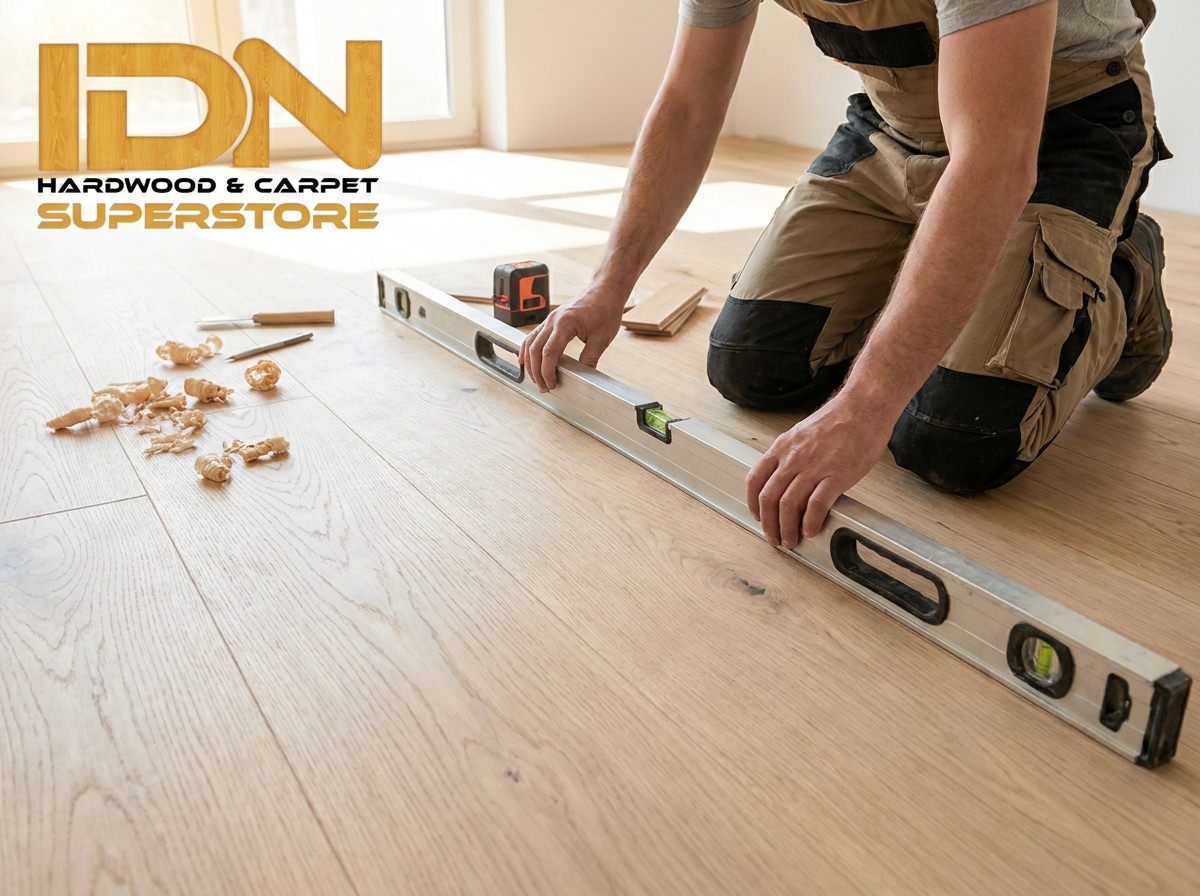
Underlayment can forgive tiny irregularities, but it is not a substitute for a flat subfloor. Significant dips or humps need correction first. A floating floor over an uneven surface can flex, stress the locking edges, and eventually fail.
A Quick Note on Product Content
Many laminate cores are made from composite wood. Federal rules set formaldehyde emission standards for composite wood products sold in the United States, and the EPA explains how compliance and labeling work. If this matters to you, ask your supplier about the labeling on the products you are considering. It is a reasonable question, and you should get a clear answer.
Serving Porter Ranch, Granada Hills, and the Surrounding Valley
We work with homeowners in Porter Ranch and Granada Hills, where multi-level layouts are common and sound is often a real consideration. For more about the product itself, visit our laminate flooring page, or see the full service area.
Frequently Asked Questions
Do I always need underlayment with laminate flooring?
Almost always, either as a separate layer or one built into the plank. We follow the manufacturer’s requirements for your specific product.
Will underlayment make my laminate quieter?
Quality underlayment reduces impact and hollow sounds, though it will not eliminate all noise.
Can underlayment fix an uneven floor?
It can smooth very minor imperfections, but larger problems need subfloor repair first.
Is a vapor barrier necessary over concrete?
In most cases, yes. We test the slab and choose a barrier that fits the product and conditions.
Plan the Layers, Not Just the Look
A great laminate floor starts below the surface. Request a free consultation or visit our Canoga Park showroom on Google Maps and we will walk you through the options.