How to choose a vinyl flooring contractor in Canoga Park comes down to eight checks. Verify the California license, then confirm the installer tests slab flatness and moisture, plans acclimation and expansion gaps, writes a detailed scope, and follows the manufacturer’s warranty rules. Once you’ve done all eight, you can hire with confidence anywhere in the San Fernando Valley.
Why Valley homes put an installer to the test
Canoga Park’s houses and climate set a specific bar for vinyl installation. A large share of the neighborhood was built in the post-war decades as single-story tract homes on concrete slabs. Those slabs have had a long time to settle, crack and develop dips. Vinyl plank shows every one of them.
Then there’s the weather. The west Valley runs hotter in summer than the coast, and dry Santa Ana winds can push indoor conditions around in fall and winter. Late November is usually mild by day and cool at night. That means a home’s interior can still swing noticeably between afternoon and early morning. Floating vinyl moves with temperature, so spacing and acclimation matter here more than in a milder climate.
Many older Valley homes also have a mix of layers underneath: original sheet flooring, old tile, patched sections from past remodels. An installer who works locally should expect this and plan for it. This is why your vetting questions should focus on prep, not only the plank you picked.
What to gather before you learn how to choose a vinyl flooring contractor
Let’s start with your own homework. Walking into conversations prepared lets you compare installers on the same terms. Here’s what to have ready:
- A rough floor plan with the rooms you want covered, including kitchens, baths and laundry areas.
- Notes on what’s under the current floor, if you know (slab, wood subfloor, old tile, sheet vinyl).
- The product you’re considering, or at least the type: rigid core, flexible plank, glue-down or click-lock.
- The manufacturer’s installation guide for that product, downloaded from the maker’s website.
- A list of trouble spots: soft areas, cracks, high spots, doorways that already stick.
- Your timeline, including whether furniture needs to move and whether you’ll be home during the work.
Think of this list as your measuring stick. Every installer gets judged against it.
Step 1: Confirm the contractor’s California license
Check the license before anything else. In California, flooring work above a minor dollar threshold generally requires a license from the Contractors State License Board, and flooring has its own classification (C-15). You can look up any license number with the CSLB license check tool. It shows whether the license is active, its classifications, and its bond and workers’ compensation status.
- Ask for the license number in writing and match the business name to the record.
- Confirm workers’ compensation coverage if the installer has employees, or an exemption on file.
- Ask for a certificate of general liability insurance.
Rules and thresholds can change, so confirm current requirements with the CSLB directly. A clean record is the floor, not the ceiling.
Frequently Asked Questions about choosing a vinyl installer
What to look for when choosing vinyl flooring?
Look at the core type, the wear layer thickness, the click or glue system, and whether the product’s installation rules fit your subfloor. Rigid core planks tolerate minor slab imperfections better than thin flexible planks, but every product still has a flatness limit. Read the manufacturer’s guide before you buy.
Is 12 mil or 20 mil LVP better?
A 20 mil wear layer is more durable and suits busy households, pets and kitchens, while 12 mil works well in bedrooms and lighter-traffic rooms. The wear layer protects the printed surface, so thicker generally means it resists scratches and scuffs longer. Match the rating to how hard the room is used.
Do high end homes use vinyl plank flooring?
Yes, many well-finished homes use vinyl plank, especially in kitchens, baths, laundry rooms and rentable guest spaces where water resistance matters. Higher-quality planks with realistic texture and thicker wear layers can look convincing beside other finishes. Placement and installation quality do most of the work in making it look upscale.
How to choose a vinyl flooring contractor near Los Angeles, CA?
Verify the contractor’s license on the CSLB website, then ask how they test slab flatness and moisture, how they handle acclimation and expansion gaps, and what their written scope includes. Local installers who regularly work on Valley slab homes should answer those questions in detail. Vague answers are a signal to keep looking.
Step 2: Ask how they check subfloor flatness
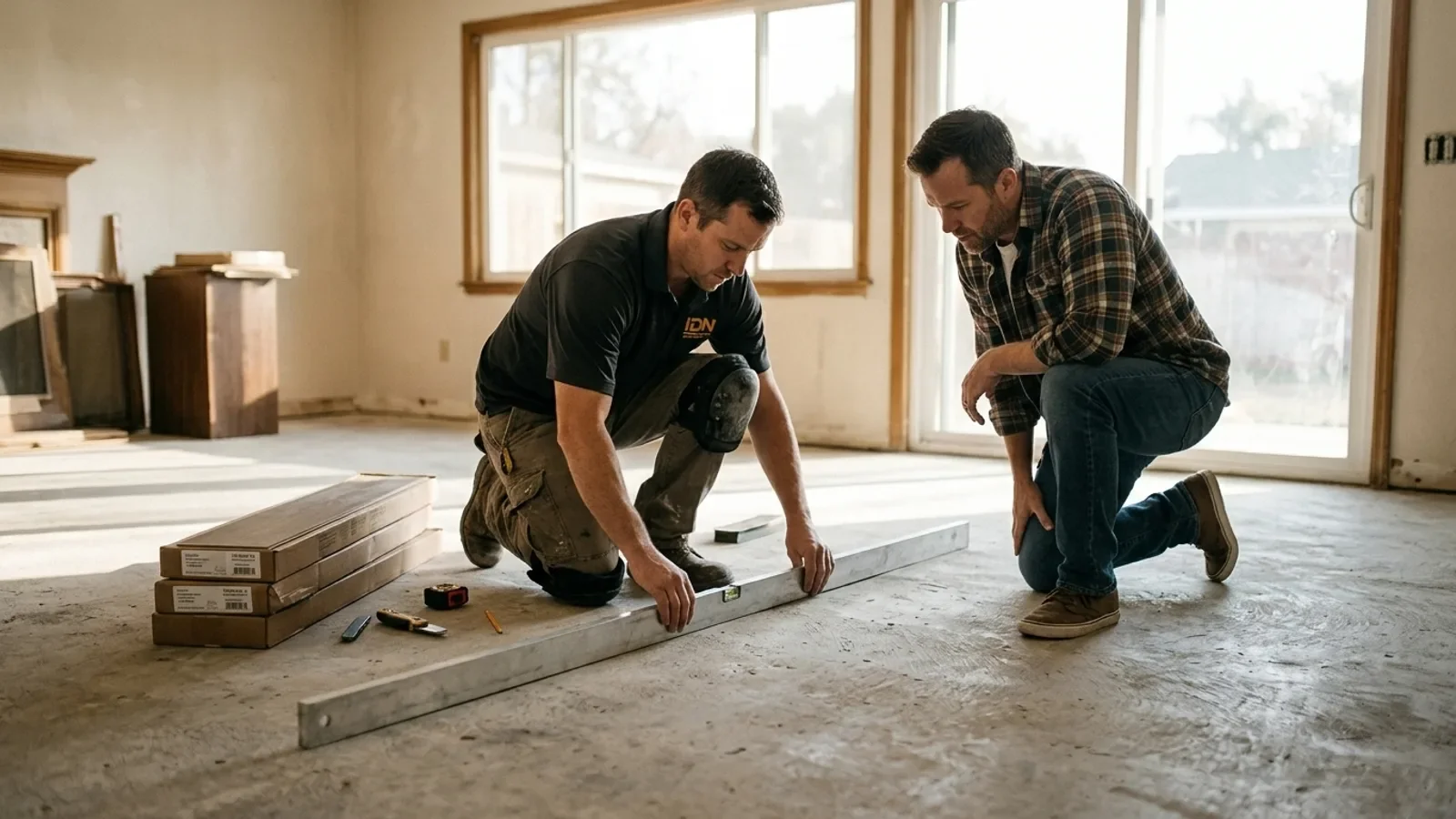
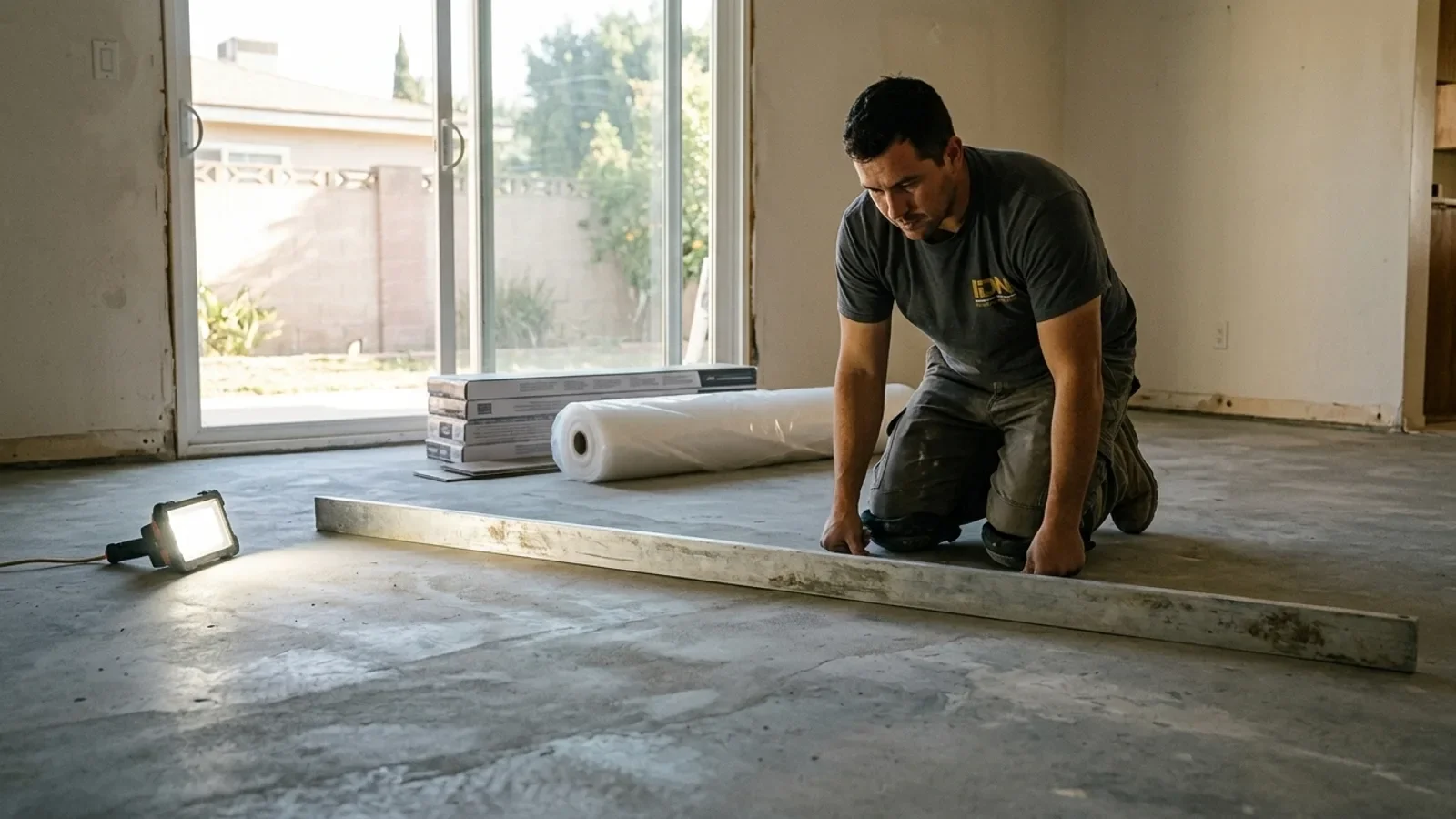
Ask exactly how the installer measures flatness. Most vinyl manufacturers publish a tolerance, usually expressed as a maximum dip or hump over a set straightedge length. A good answer names the tool (a long straightedge or level) and the product’s tolerance. Then it explains what happens when a spot falls outside it.
On Canoga Park slabs, that usually means grinding high spots and filling low ones with a patching or self-leveling compound. Ask whether that prep is included in the estimate or billed separately. If you want to understand what this work looks like, our guide to preparing a concrete slab for vinyl plank in Canoga Park walks through it. Flat floors make click joints last.
Step 3: Ask about acclimation and expansion gaps
Ask how long the product will sit in your home before installation, and at what temperature. Many manufacturers specify an acclimation period with the home at normal living conditions. Some rigid core products need less time. The installer should know the rule for your specific plank.
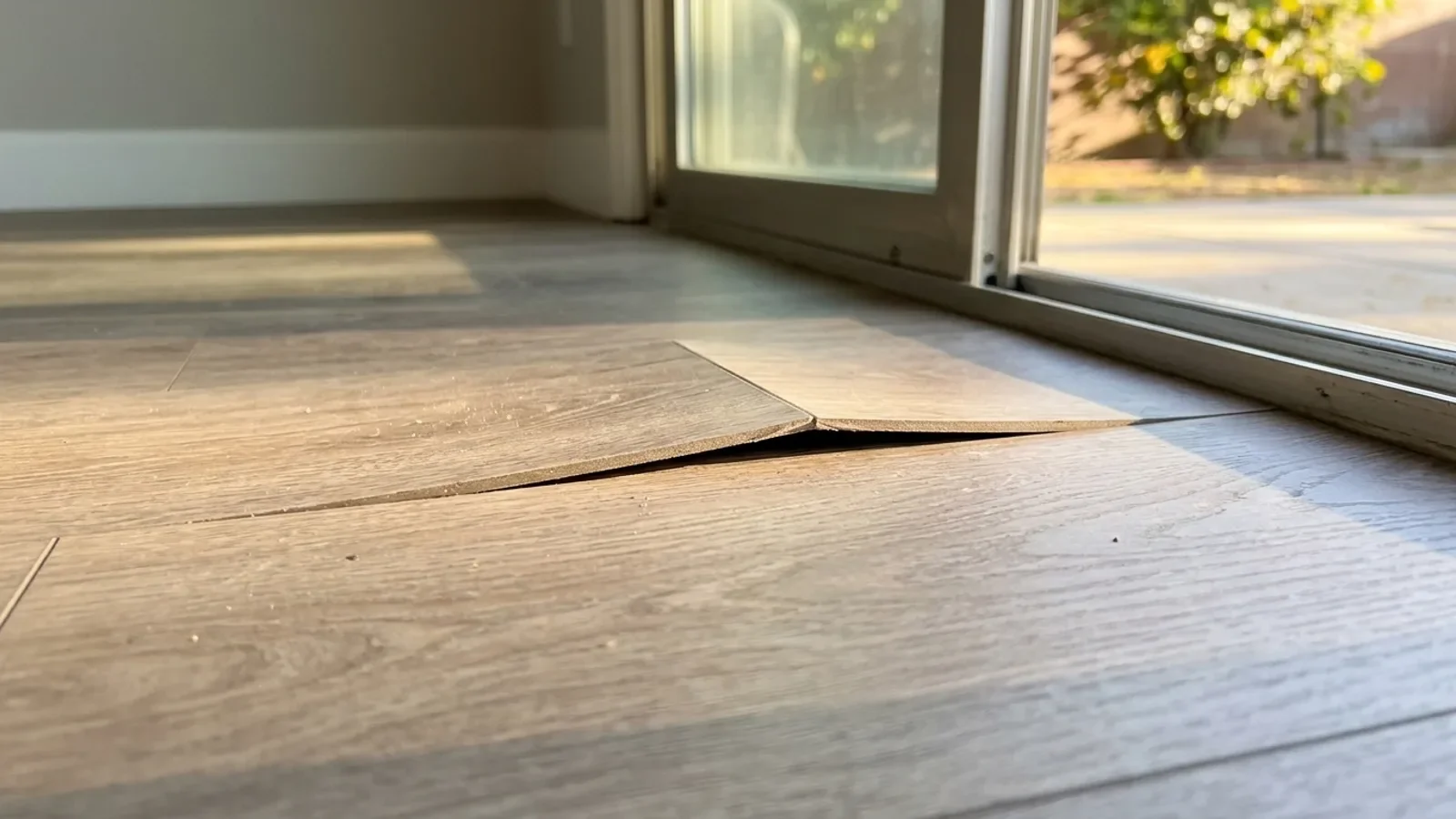
Then ask about expansion gaps. Floating vinyl needs space at walls, cabinets, door jambs and fixed objects so it can move. Ask how wide the gap will be, how it gets covered, and whether long runs or wide-open floor plans need a transition break. These two questions are the heart of the vinyl floor installation in San Fernando Valley homes guide. It covers what happens when they’re skipped.
- Heavy kitchen islands should not pin a floating floor down.
- Gaps hidden under baseboard or quarter round should still be there after trim goes on.
Skipped gaps are a common cause of buckling. Ask early.
Step 4: Confirm moisture testing on concrete
Ask whether the installer tests the slab for moisture and which method they use. Waterproof vinyl resists water on top. That doesn’t mean moisture rising from below is harmless, because it can affect adhesives, underlayment and the slab’s surface. Common methods include relative humidity probes and calcium chloride tests.
Also ask whether your product calls for a vapor barrier, or whether one is built into an attached pad. Adding a second barrier where the manufacturer doesn’t want one can cause its own problems. The installer should follow the product’s guide, not habit.
Step 5: Read the written estimate line by line
Request a written scope that spells out every task. A useful estimate separates removal of old flooring, disposal, subfloor prep, underlayment, installation, transitions, trim and furniture moving. It names the product and the square footage. Then it states what triggers a change order.
When you line up estimates from different installers, compare the scope rather than the bottom line. One quote may include leveling and new baseboard. Another may leave both out. Missing line items tend to surface mid-project. Clarity now prevents surprises later.
Step 6: Ask about wet areas, stairs and transitions
Ask how the installer handles kitchens, bathrooms, laundry rooms and stairs. These spots reveal skill. Around tubs, toilets and dishwashers, ask whether they’ll caulk the perimeter with flexible sealant where the manufacturer recommends it. Ask how they finish where vinyl meets tile, carpet or a sliding door threshold.
Stairs deserve their own question. Vinyl on stairs usually needs matching nosing pieces and glue-down methods, and it takes more time per step. Ask to see how they’d detail it. Edges are where shortcuts show.
Step 7: Confirm warranty requirements and care instructions
Ask how the installer protects the manufacturer’s warranty. Most product warranties depend on following the installation instructions, including flatness, gaps, acclimation and approved underlayment. Ask whether the installer also offers a written workmanship warranty, and what it covers.
Finally, ask for care instructions when the job is done: approved cleaners, furniture pads, and how to handle sun-heavy rooms. Our guide on caring for waterproof vinyl in the Valley covers the basics. Care starts on day one.
Step 8: Watch how they answer, not only what they say
Pay attention to how each installer responds to your questions. A strong candidate visits the home, measures, looks at the slab or subfloor, and explains trade-offs in plain words. They should be comfortable saying when a product isn’t a good fit for your floor.
Notice whether they mention the issues covered in the overview of common vinyl installation mistakes in Valley homes without being prompted. Prepared installers bring up prep, gaps and moisture on their own. That’s the clearest sign you’ve found the right fit.
When to call a professional in Canoga Park
Some parts of a vinyl project are firmly professional territory. Bring in a licensed contractor when the job involves any of these:
- Slabs with cracks, noticeable dips or signs of moisture that need leveling or testing.
- Removing old sheet flooring, tile or mastic in an older home. Some older flooring materials and adhesives may contain asbestos, so have them evaluated before anyone disturbs them.
- Stairs, where safety and nosing details matter.
- Work around plumbing fixtures, appliances or gas connections.
- Large open floor plans that may need planned expansion breaks.
Requirements for testing and abatement vary, so check local rules and consult a licensed pro. When in doubt, ask before demolition begins.
Quick checklist
- Verify the CSLB license, insurance and workers’ compensation status.
- Ask how flatness is measured and how out-of-tolerance spots are fixed.
- Confirm acclimation time and expansion gap width for your product.
- Make sure slab moisture testing is part of the plan.
- Get a line-by-line written scope, including prep and trim.
- Ask how the manufacturer’s warranty is protected.
Bring this checklist to every conversation, and when you’re ready to ask your questions in person, reach out to IDN Hardwood and Carpet Superstore in Canoga Park.