Do you really need a moisture barrier between a concrete slab and a wood floor? In most cases, yes, and the slab should be tested before anyone picks a barrier. Here in Canoga Park and across the San Fernando Valley, plenty of homes sit on concrete. Below are seven things we check before wood goes down, so you know what good prep looks like.
1. Concrete is never as dry as it looks
A slab can feel bone dry to your hand and still push moisture up into whatever sits on top of it. Concrete is porous. It holds water from the original pour, and it can wick ground moisture from the soil below, especially where there’s no vapor retarder under the slab or the old one has broken down.
That moisture moves slowly and quietly. You won’t see it on a bare floor because it evaporates into the room. Cover the slab with wood, though, and the vapor gets trapped right at the underside of the planks. That’s where trouble starts.
So the first rule is simple. Don’t judge a slab by touch, by how old the house is, or by the fact that the old carpet looked fine. Test it.
2. The right test depends on the slab and the floor
There isn’t one universal moisture test, and a quick reading from a handheld meter is a starting point, not a verdict. Here’s how the common methods differ:
- Plastic sheet test (ASTM D4263): a sheet taped to the slab, checked later for condensation or darkening. It’s a rough yes/no screen.
- Calcium chloride test (ASTM F1869): measures how much vapor the surface releases over a set period.
- In-situ relative humidity probes (ASTM F2170): sensors placed in drilled holes to read humidity inside the slab itself. Many flooring manufacturers now reference this method.
- Concrete moisture meters: useful for mapping wet and dry zones across a room, then confirming with a more formal test.
What matters most is matching the test to what the flooring manufacturer asks for. Their installation instructions set the acceptable limits.
3. Valley tract homes bring their own slab history
This is where Canoga Park gets specific. A lot of the neighborhood was built out during the postwar tract-home boom, and many of those single-story houses were poured slab-on-grade. Others in the area sit on raised foundations, so the first thing we confirm on a visit is which one you have. Older slabs can have spots that behave differently from the rest of the floor.
Over the decades, these homes have been remodeled again and again. We often find old adhesive from glue-down carpet pad or vinyl tile, patched areas from plumbing reroutes, and additions poured years after the original slab. Each patch can hold moisture differently. A converted garage is a classic example, because that concrete may sit lower and was never meant to live under a finished floor.
The Valley’s climate adds a twist too. Hot, dry summers and a wetter stretch in winter mean slab readings can shift through the year. Irrigation close to the foundation can also raise moisture along exterior walls. For more on how our local weather affects wood itself, see our piece on how Canoga Park’s heat and dry air treat engineered wood.
4. Solid and engineered hardwood handle slabs very differently
This is the decision that shapes everything else. Traditional solid hardwood is usually nailed down, and you can’t nail into concrete. Putting solid wood over a slab typically means building a plywood subfloor first, with its own moisture control underneath. That raises floor height and changes transitions at doors and other rooms.

Engineered hardwood is built in layers, which makes it more dimensionally stable when humidity changes. Many engineered products are rated for glue-down or floating installation directly over a properly prepared slab. That’s a big reason it’s so popular in slab homes around the Valley.
If you’re still weighing the two, our main guide breaks down how engineered and solid hardwood compare in Valley homes, including where each one makes sense. Short answer? On concrete, engineered usually wins.
5. A concrete slab moisture barrier for wood floors comes in several forms
Once testing tells us what the slab is doing, we choose the barrier. Options generally fall into a few groups:
- Polyethylene sheeting: a common vapor retarder under floating floors, with seams overlapped and taped.
- Underlayment with a built-in vapor layer: combines cushion, some sound control, and moisture protection in one product for floating installs.
- Liquid-applied membranes: rolled or troweled onto the slab before a glue-down install, forming a continuous layer.
- Moisture-control adhesives: some flooring adhesives are formulated to act as both the bond and the vapor retarder, within the limits the maker lists.
None of these is a cure-all. Each one is rated for a certain range of slab moisture. If readings come in above that range, the product isn’t the right fit, no matter what it promises on the bucket.
6. Flatness and cleanliness matter as much as dryness
A dry slab can still cause a bad floor. Wood needs a flat, sound surface. High spots make floating floors flex and click. Low spots leave glue-down planks hollow, and hollow spots can loosen over time.
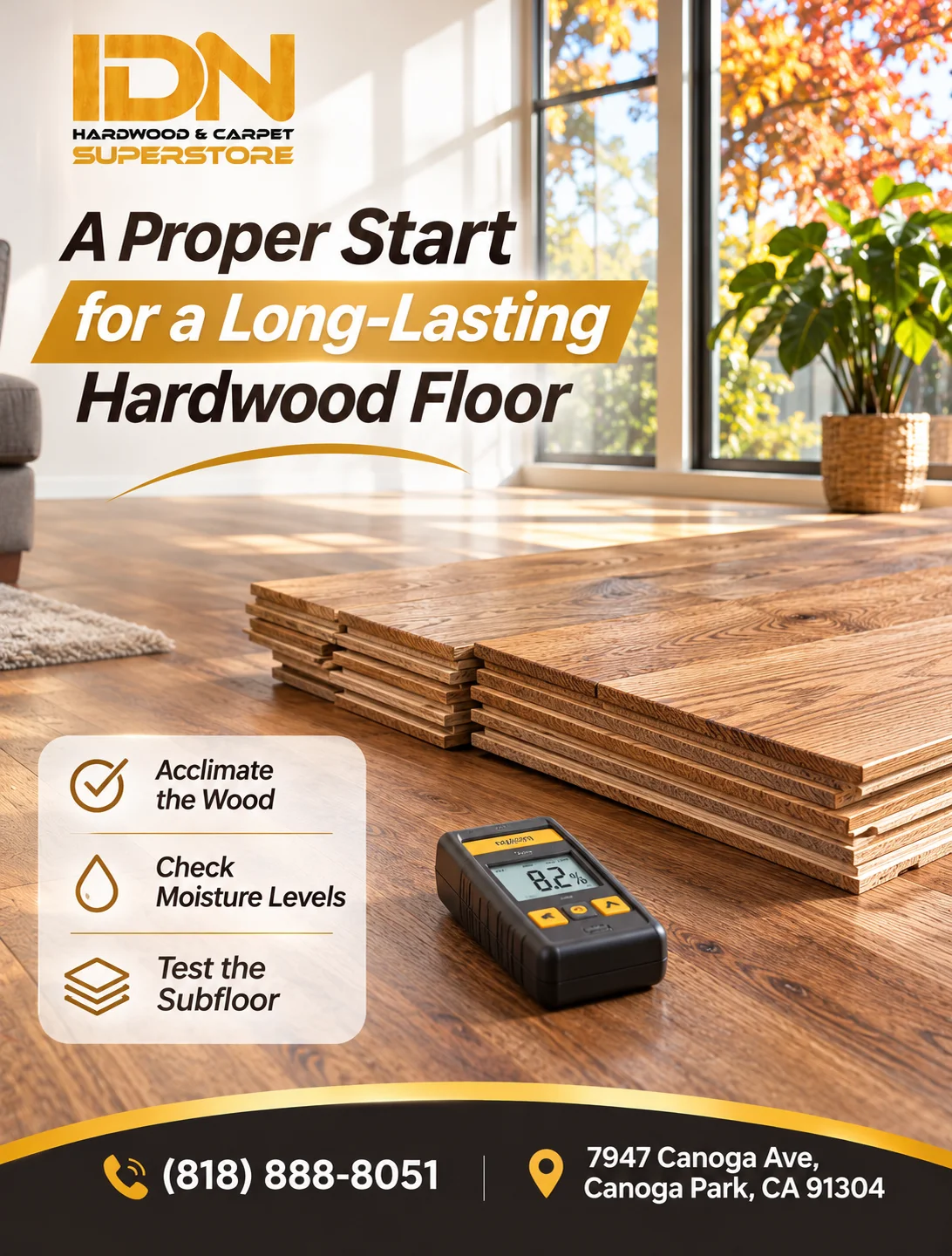
Prep often includes grinding down ridges, filling dips with a patching or leveling compound, and removing old adhesive residue that could block a membrane from bonding. Cracks get evaluated too. Hairline shrinkage cracks are common in older slabs. Larger cracks or ones with height differences may point to movement that needs a closer look before any flooring goes in.
This part isn’t glamorous. It takes time. But it’s often the difference between a floor that stays quiet and tight and one that starts to bother you within a season or two.
7. Ask how your installer documents the slab
Good slab prep should leave a trail. Before you sign anything, ask what test will be run, where in the house readings will be taken, and how results compare to the flooring maker’s limits. Readings should come from several rooms, not one convenient spot by the front door.
Documentation protects you. Many manufacturer warranties depend on the installer following their published moisture and prep requirements. If something goes wrong later, test results show the floor went down on a slab that met spec.
We’ve put together a list of questions worth asking any hardwood installer before you hire, and slab testing is near the top. When we handle engineered hardwood installs for Valley slab homes, testing and prep are part of the plan from the first visit, not an add-on. You can also read our guide to choosing the right hardwood for your Canoga Park home for the bigger picture on materials.
Frequently Asked Questions
Can I put hardwood directly on a concrete slab in Canoga Park?
Engineered hardwood can often be glued or floated over a properly tested and prepared slab, with the right moisture barrier. Solid hardwood usually needs a plywood subfloor first because it’s designed to be nailed.
Is a moisture barrier needed if my slab tests dry?
Most manufacturers still call for a vapor retarder over concrete, because slab moisture can change with seasons, irrigation, and rain. Check the specific flooring’s installation instructions, since requirements vary by product.
How long does slab moisture testing take?
It depends on the method. A meter scan can happen during an estimate visit, while calcium chloride and in-situ humidity tests need the slab and room to sit under set conditions for a period before readings are final.
A beautiful wood floor is only as reliable as the concrete under it. Test first, pick the barrier second, and let the results guide the material. If you’re planning hardwood over a slab anywhere in Canoga Park or the West Valley, reach out to IDN Flooring and we’ll take a look at what’s under your feet.