Most people think the hard part of a vinyl floor is picking the plank. It isn’t. The plank is the easy decision, and the installer is the one that decides whether your floor stays flat, quiet and sealed at the edges for years. If you’re hiring a vinyl flooring contractor in the San Fernando Valley, from Canoga Park and Woodland Hills to Reseda, Northridge and Van Nuys, the way you hire matters as much as who you hire.
Homeowners here usually end up choosing between three routes: a flooring store that both supplies and installs, an independent installer you hire separately after buying material yourself, or a general contractor who folds flooring into a bigger remodel. Each can work. Each fails in its own predictable way. This guide compares them, gives you the questions that separate a careful crew from a rushed one, and explains where the Valley’s slabs and summer heat change the answers.
We’re IDN Hardwood and Carpet Superstore in Canoga Park, so we’ll be upfront that we’re the first type. We’ll still lay out all three fairly.
Route one: a flooring store that sells and installs
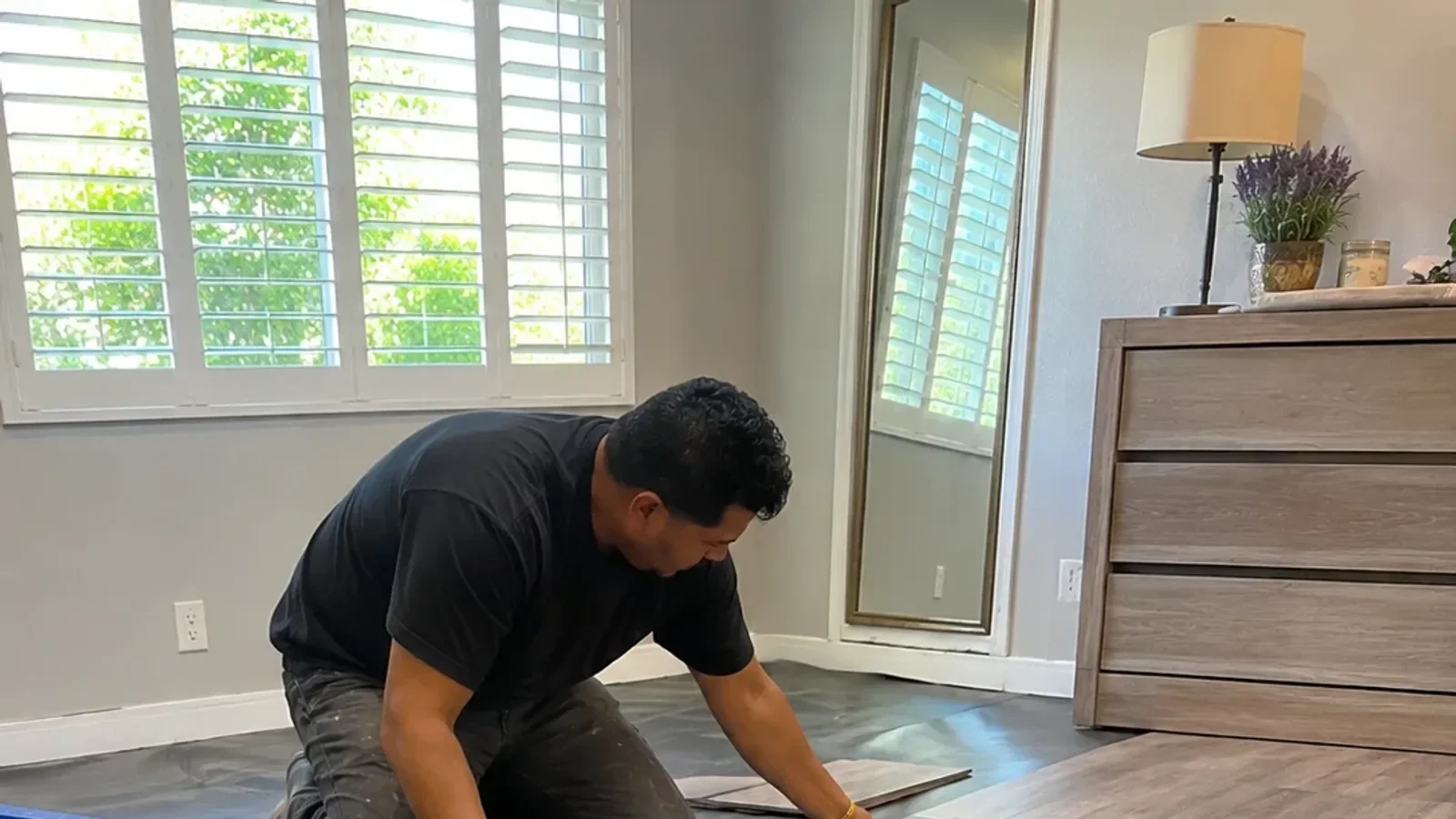
This is the one-stop model. You walk a showroom, handle the samples, take a few home, and the same business that sells the vinyl schedules the crew to measure and install it.
The biggest advantage is accountability in one place. If a plank shows a defect, or a seam opens near a sliding door, you aren’t stuck refereeing between a supplier who blames the install and an installer who blames the product. One team owns the outcome.
It also tends to tighten the details people forget. The store knows the specific product’s acclimation guidance, its approved underlayment, and whether it’s rated for the sun exposure your west-facing room gets. Those manufacturer requirements live right next to the material.
The tradeoff is choice. You’re picking from that store’s lineup and its crews. Ask to see the range, and ask who actually performs the work.
Questions to ask a store-based installer
- Are your installers employees or subcontractors, and who supervises the job day to day?
- Who comes out to measure, and do they check the subfloor for flatness and moisture at that visit?
- Which products in your showroom are rated for heavy sun and heat?
- If there’s a problem after install, who do I call first?
Route two: an independent installer, materials bought separately
Some homeowners buy vinyl on their own, online or from a warehouse, then hire an installer for labor only. It gives you full control over the product, and plenty of independent installers are skilled and careful.
The risk sits in the gaps. Nobody is responsible for confirming that the boxes you bought match the room, came from the same production run, or were stored properly before delivery. If the floor misbehaves later, the product and the labor are two separate conversations.
Quantity is a common snag too. Run short on a discontinued color and you may never match it. A good independent installer will calculate waste and flag these issues. You just need to make sure that conversation happens before materials arrive, not after.
Questions to ask an independent installer
- How much overage do you want me to order for this layout?
- Will you test the slab or subfloor before you start, or assume it’s ready?
- Who handles a manufacturer warranty claim if the planks fail?
- Do you remove and dispose of the old flooring, or is that on me?
Route three: a general contractor handling a larger remodel
If the floor is one piece of a kitchen or full-house renovation, your general contractor may coordinate flooring alongside cabinets, paint and trim. That keeps scheduling under one roof, which is helpful when trades are stacking up.
The catch is that flooring becomes one line item among dozens. The GC usually subcontracts it, and you may never meet the person laying your planks. Sequencing matters too. Vinyl generally goes in after the messy work wraps, and drywall dust or a dropped tool on a finished floor is a real risk on a busy site.
This route makes sense when the remodel is large. For a floor-only project it adds a layer you probably don’t need.
Questions to ask a general contractor
- Who is your flooring sub, and can I see their recent work?
- At what stage of the project will the floor go in?
- How will the new floor be protected while other trades finish?
Side-by-side: how the three routes compare
Here’s how the options stack up on the points that actually affect your finished floor.

| Criteria | Flooring store that installs | Independent installer | General contractor |
|---|---|---|---|
| Single point of accountability | Yes, product and labor together | Labor only; product is yours | Yes, but flooring is subcontracted |
| Product knowledge and specs | Strong, tied to the lineup sold | Varies by installer | Often relayed secondhand |
| Product selection | Limited to the store’s range | Anything you can buy | Varies by GC’s suppliers |
| Subfloor assessment | Usually built into the measure | Depends on the installer | Depends on the sub |
| Scheduling control | Direct with the store | Direct with installer | Tied to the whole remodel |
| Warranty handling | One contact for most issues | Split between seller and installer | Through the GC |
What the Valley does to a vinyl floor
This part is local, and it changes which questions matter most.
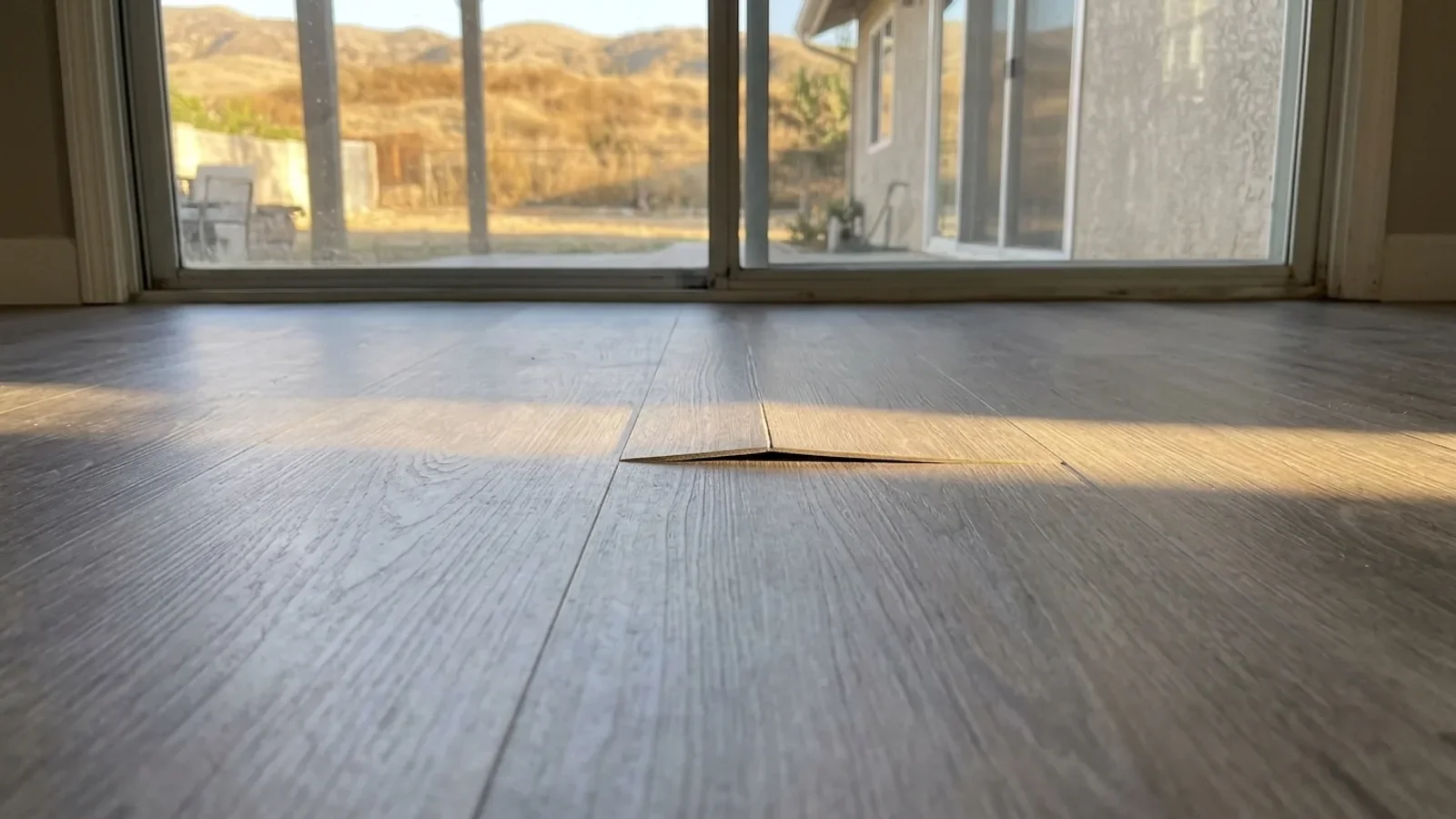
A huge share of San Fernando Valley homes, especially the postwar ranch houses across Canoga Park, Reseda, Winnetka and Northridge, sit on concrete slabs. Slabs that old often have dips, cracks, leftover carpet tack strip holes and adhesive residue from two or three earlier floors. Vinyl, particularly thinner click planks, telegraphs those flaws. A hump becomes a hollow spot. A dip lets a click joint flex until it separates. Concrete can also carry moisture up from below, which is why careful crews test before they install. We walk through that process in our piece on preparing an older Canoga Park slab for vinyl.
Then there’s the heat. Valley summers run noticeably hotter than the coast, and big sliding doors and west-facing windows can bake a floor in the afternoon. Vinyl expands with heat, so expansion gaps at walls, proper transitions in long runs, and product choice all matter more here than in a milder climate. If you’re weighing budget planks, read why Valley heat is hard on lower-grade vinyl before you commit. The cooler months are a comfortable time for install work, though a good crew follows the product’s acclimation and temperature guidance whatever the season.
Permit needs and building requirements vary by project and jurisdiction, so check with your local building department or a licensed pro if your job goes beyond replacing floor coverings.
The questions that matter on any route
Whichever path you take, these questions sort careful installers from rushed ones. Listen for specifics. Vague answers are the warning sign.
About the subfloor
Ask how they check flatness and moisture, and what they do when a slab falls outside the manufacturer’s tolerance. Grinding high spots and filling low ones is normal prep. A crew that says every floor is fine as-is hasn’t looked closely.
About acclimation and layout
Ask whether the product needs acclimation, and for how long according to the manufacturer. Ask how they plan the layout so you don’t end up with skinny slivers at a doorway. Good installers think about where the eye lands first.
About transitions and edges
Where does the vinyl meet tile, carpet or an existing hardwood hallway? Ask which transition pieces they’ll use and how they’ll handle door jambs. Undercutting jambs looks far cleaner than caulking around them. The details live at the edges.
About the paperwork
Ask for a written scope that lists removal, prep, materials, transitions, baseboard or quarter-round work, and cleanup. Confirm licensing and insurance where applicable. Ask what the warranty covers and who honors it.
About cost, without the numbers
Quotes vary for real reasons: the amount of slab prep, old-floor removal, stairs, furniture moving and trim work. Compare scopes line by line instead of comparing totals. A much lower bid often just leaves prep out. Our breakdown of what drives vinyl install pricing in the Valley covers this in more depth.
Which is right for San Fernando Valley homes
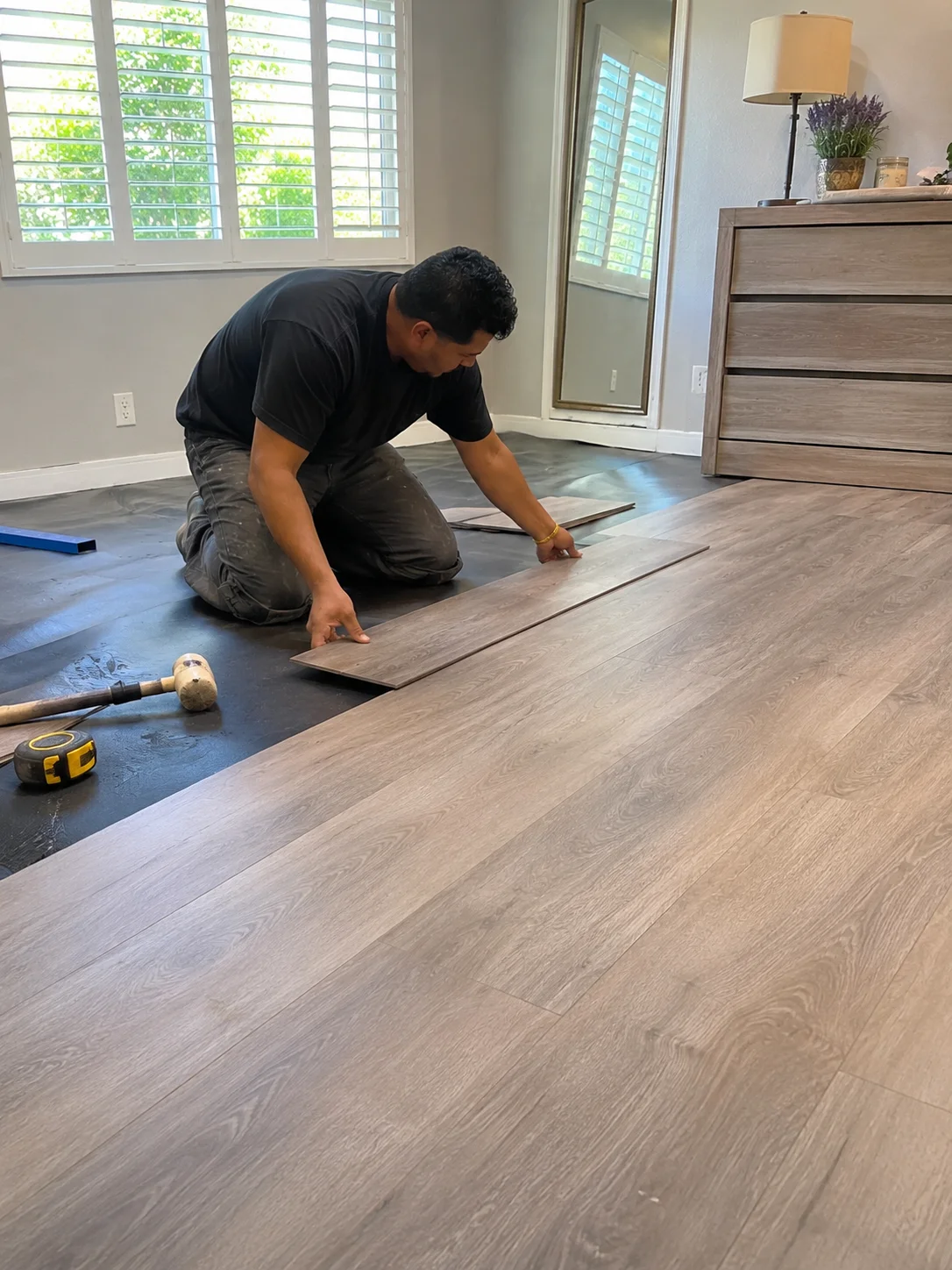
The short version: for most floor-only projects in the Valley, a flooring store that sells and installs is the most straightforward choice. You get one accountable team, product specs that match the crew’s methods, and a subfloor check built into the measure. That matters a lot on older Valley slabs.
An independent installer is a strong option if you’ve already found a specific product elsewhere and you’re organized. Just own the ordering, storage and warranty paperwork yourself.
A general contractor makes sense when flooring is truly one piece of a larger renovation. For a living room, bedrooms or a whole-house vinyl swap, it’s usually more layers than you need.
If you’re leaning toward the first route, our guide to how we handle luxury vinyl plank installation in Canoga Park explains prep, transitions and acclimation step by step.
Frequently Asked Questions
How do I know if a vinyl installer will prep my slab properly?
Ask them to describe how they test flatness and moisture and what they do when the slab is out of tolerance. A careful installer will mention specific steps like grinding, patching and moisture testing rather than saying the floor looks fine.
Is it a problem to buy vinyl online and hire someone to install it?
Not necessarily, but you take on responsibility for ordering enough material, matching production runs and storing boxes properly. If something fails, product and labor warranties are handled separately.
Does Valley heat affect how vinyl should be installed?
Yes. Hot afternoons and sunny rooms make vinyl expand, so proper expansion gaps, sensible transitions on long runs and a heat-appropriate product matter more here than in cooler areas.
Should my installer remove the old flooring?
Ask before you sign. Many installers handle removal and disposal as part of the scope, and it’s worth confirming in writing so prep isn’t left half done.
Do I need a permit to replace flooring?
Requirements vary by jurisdiction and project scope. Check with your local building department or a licensed professional, especially if the work involves anything beyond the floor covering itself.
Let’s talk about your floor
Choosing an installer is a judgment call, and the right questions make it much easier. If you’d like to see vinyl in person, our Canoga Park showroom has samples you can take home, and our team can talk through your subfloor, layout and transitions. When you’re ready, you can schedule a measure for your vinyl floor and we’ll take it from there. Already installed? Our notes on caring for waterproof vinyl in the Valley will help it keep looking right.