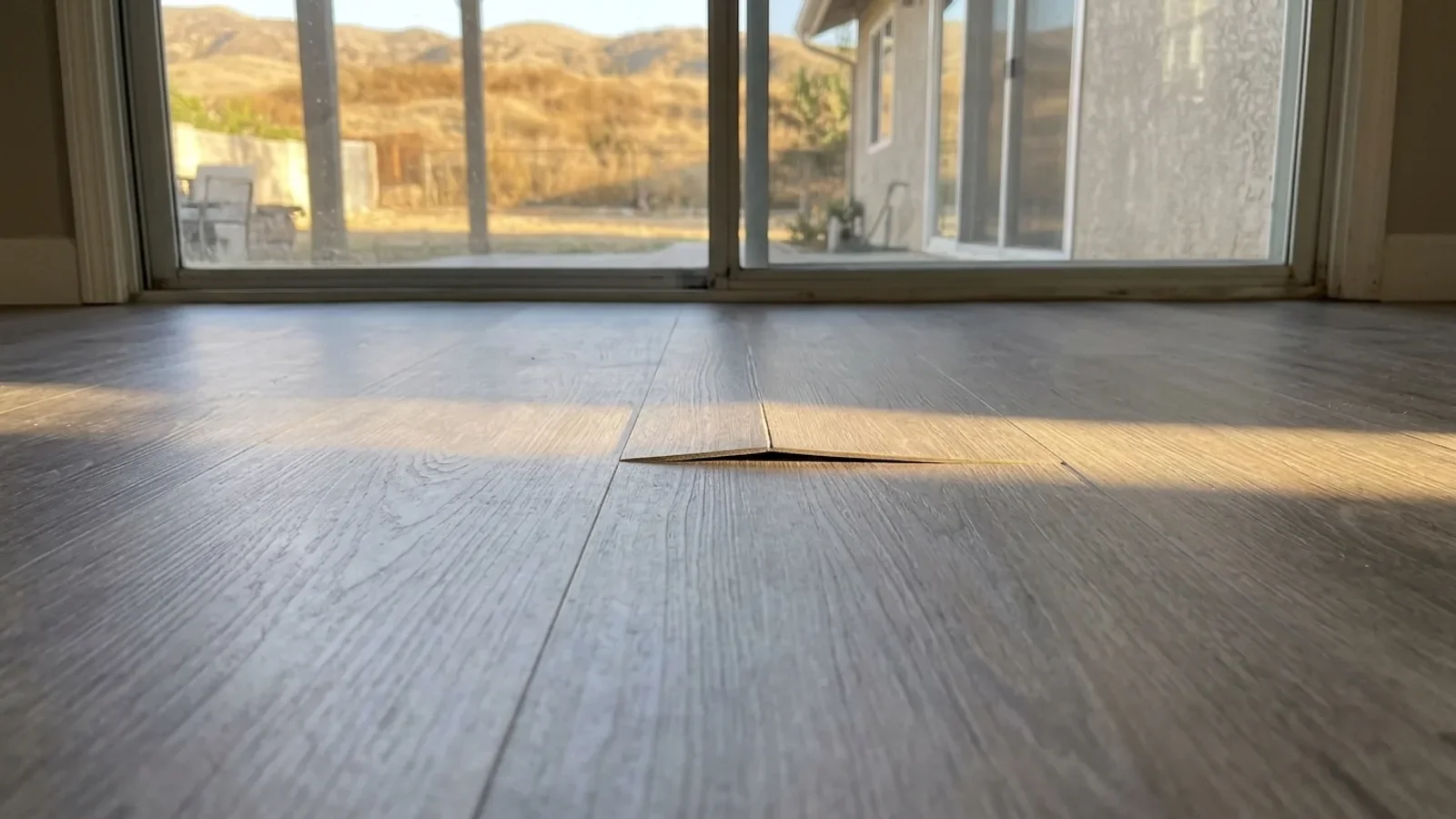
You step out of the kitchen in socks and feel it: a soft dip near the dishwasher, a plank edge that clicks under your heel. That small give is usually where a vinyl floor started going wrong. Here in Canoga Park and across the San Fernando Valley, we see it often. Good vinyl floor installation in San Fernando Valley homes starts well before the first plank goes down. This guide walks through the parts that matter most.
Why waterproof vinyl is popular in Valley homes
Waterproof vinyl plank and tile have earned their place in kitchens, laundry rooms, bathrooms and busy family rooms. The core resists water, so a spilled bowl or a dripping pet doesn’t soak in the way it can with some other floors. It’s comfortable underfoot. It can look convincingly like wood or stone.
There’s a catch. “Waterproof” describes the plank, not the floor system. Water that gets past the seams, around the perimeter or under a dishwasher can still reach the subfloor. That’s why waterproof vinyl flooring installation is mostly about what happens at the edges, the seams and below the surface.
At IDN Hardwood and Carpet Superstore, our Canoga Park showroom carries vinyl alongside hardwood, engineered wood, laminate and carpet. That lets us steer you toward vinyl where it actually fits, and toward something else where it doesn’t.
Subfloor preparation for vinyl flooring: the part nobody sees
Vinyl is thin and fairly flexible compared with hardwood. It telegraphs what’s underneath. A ridge in the concrete, a proud screw head or a low spot in the plywood can show up as a bump, a hollow sound or a seam that won’t stay locked.
Most manufacturers publish a flatness tolerance for their product, and the installer’s job is to meet it. Proper subfloor preparation for vinyl flooring usually includes:
- Removing old flooring, adhesive residue, tack strips and staples.
- Checking flatness with a straightedge across the whole room, not just the middle.
- Grinding down high spots and filling low spots with a patching or self-leveling compound.
- Securing loose plywood or subfloor panels that squeak or flex.
- Testing concrete for moisture before choosing an underlayment or vapor barrier.
- Vacuuming thoroughly so grit doesn’t end up trapped under the planks.
None of this is glamorous. It is where most of the labor goes on a job done well. If you want the slab-specific details, our write-up on prepping concrete slabs in Canoga Park for vinyl goes deeper on grinding, patching and moisture.
Concrete versus wood subfloors
Slabs and wood framing fail in different ways. Concrete tends to bring moisture and unevenness. Wood tends to bring movement and squeaks. The prep changes accordingly, and so does the underlayment choice.
Acclimation: giving planks time to settle in
Vinyl expands and contracts with temperature more than many people expect. Acclimation lets the material adjust to the room before it’s locked together. The exact time and conditions come from the manufacturer, and we follow those instructions for the specific product you choose.
In practice that means boxes are brought into the room where they’ll be installed, stacked flat, and left with the home’s normal heating or cooling running. Planks that sat in a hot garage or a delivery truck shouldn’t go straight down. Rushing this step is a common reason for gaps or peaking later.
Late fall is actually a comfortable time for this in the Valley. Days are milder, so it’s easier to keep the house at a steady living temperature while the boxes sit.
What makes the San Fernando Valley different for vinyl floors
The Valley isn’t the coast. Summer afternoons in Canoga Park, Woodland Hills, Reseda and Chatsworth can get far hotter than neighborhoods closer to the ocean, and that heat shows up indoors. Floors near west-facing sliders and big windows can get noticeably warm when the sun hits them. Vinyl moves with that heat, and lower-quality products can soften, gap or buckle. We explain the mechanics in our piece on how Valley heat warps cheaper vinyl.
Housing stock matters too. Much of the Valley was built out in the postwar decades, and plenty of those single-story ranch homes sit on concrete slabs. Older slabs can have cracks, old adhesive and uneven patches from previous remodels. Raised-foundation homes and second stories bring wood subfloors instead, sometimes with decades of settling.
For us, that means a few habits on Valley jobs:
- Recommending products with a rigid core when a room gets strong afternoon sun.
- Leaving the full expansion gap the manufacturer calls for, especially in long, open rooms.
- Suggesting window coverings for rooms with intense direct sun.
- Taking slab moisture seriously, even in a dry climate, since moisture can come up from below.
Earthquake-country homes also tend to have hairline slab cracks. Many are cosmetic, but they still need to be addressed so they don’t telegraph through thin flooring. If a crack looks structural, that’s a question for a licensed structural professional, not a flooring crew.
Transitions, thresholds and the details that show
Transitions are where an installation either looks finished or looks patched together. Vinyl often meets tile, carpet, hardwood or an exterior door, and each meeting point needs the right profile.

| Where vinyl meets | Typical transition | What we watch for |
|---|---|---|
| Carpet | Carpet-to-hard-surface reducer or tack strip edge | Height difference and a clean carpet edge |
| Tile | T-molding or a low-profile reducer | Matching heights so there’s no toe-stubbing lip |
| Hardwood or laminate | T-molding | Expansion space for both floors on either side |
| Exterior door or slider | Threshold or end cap | Sealing the edge where water and sun hit hardest |
| Stairs | Stair nose made for the product | Secure fastening and a profile that won’t flex |
| Walls and cabinets | Baseboard or quarter round | Covering the expansion gap without pinning the floor |
One mistake we see often: trim nailed straight through the planks. Floating vinyl needs to move. Pin it down at the edges and it has nowhere to go, which can lead to buckling.
Wet areas need extra care
In bathrooms and laundry rooms, the perimeter is the weak point. We pay close attention to the gaps around tubs, toilets and water lines, and to sealing where the manufacturer’s instructions call for it. That’s how the floor behaves like a waterproof system instead of just a waterproof product.
What actually happens on installation day
Every home is different, but a typical vinyl flooring installation in San Fernando Valley homes follows a similar order:
- Walk-through and measuring. We confirm rooms, transitions, and which doors may need trimming.
- Moving and protection. Furniture is moved as arranged and nearby surfaces are protected.
- Removal. Old flooring and fasteners come out, and debris is cleared.
- Subfloor prep. Flattening, patching, securing and moisture checks happen here.
- Underlayment. If the product calls for it and it isn’t already attached, it goes down next.
- Layout. We plan plank direction and row widths so you don’t end up with a sliver along a visible wall.
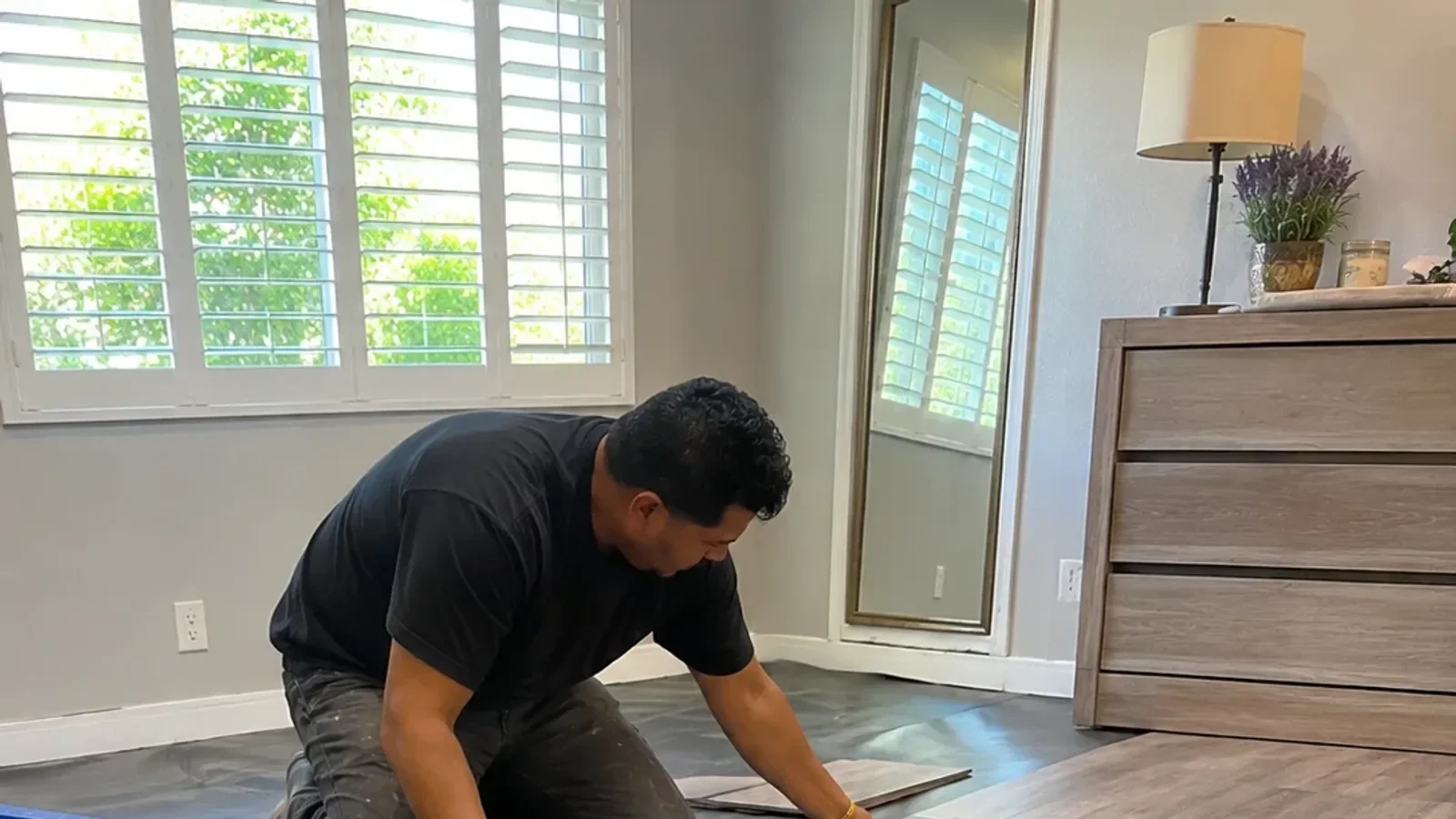
- Installation. Planks are cut and locked, with expansion gaps kept at the walls.
- Transitions and trim. Moldings, stair nosing and baseboard or quarter round finish the edges.
- Cleanup and walk-through. We review the floor with you and go over care basics.
Step four is where schedules sometimes stretch. An old slab can hide surprises under carpet or tile. We’d rather tell you what we found than cover it up.
Luxury vinyl plank installation in Canoga Park: working with us
Our showroom is right here in Canoga Park, so you can see and handle samples before deciding. Bringing a sample home to check it in your own light is a good idea. Valley sun changes how a color reads.
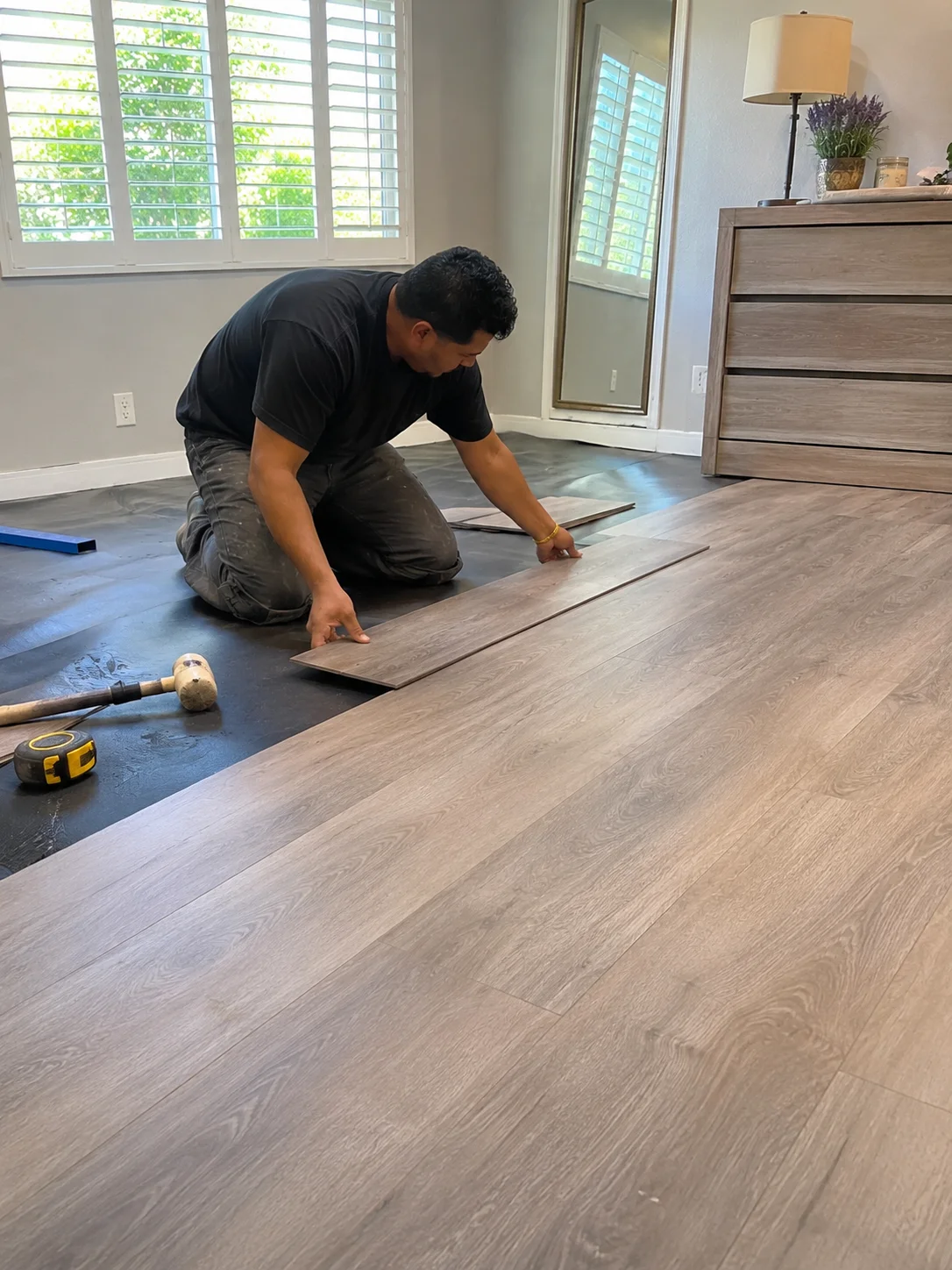
When you’re ready, our team can handle professional vinyl plank installation for your home from product selection through final trim. We’ll talk honestly about which rooms suit vinyl and where hardwood, engineered wood, laminate or carpet might serve you better. If you’re still comparing contractors, our checklist on what to ask a Valley vinyl installer lays out the questions worth raising with anyone you talk to.
Ready to start? Stop by the showroom or contact us to set up a visit.
Keeping a new vinyl floor looking right
Vinyl is low-maintenance, not no-maintenance. Grit is the main enemy, acting like sandpaper under shoes and chair legs. Regular sweeping or vacuuming on a hard-floor setting helps a lot.
- Use felt pads on furniture legs and chair mats under rolling office chairs.
- Wipe spills promptly, even though the planks resist water.
- Clean with products the manufacturer approves, skipping harsh solvents and wax.
- Put mats at exterior doors, ideally ones without rubber backing that can discolor vinyl.
Our vinyl care guide for Valley homes covers cleaning routines and sun protection in more detail.
Frequently Asked Questions
Can vinyl flooring go over my existing tile?
Sometimes. It depends on whether the tile is solid, flat enough for the product and whether grout lines will telegraph through. We assess it on site and follow the manufacturer’s guidance.
How long should vinyl planks acclimate before installation?
It varies by product, so we follow the manufacturer’s specific instructions. Generally the boxes sit flat in the room where they’ll be installed, with normal living temperatures maintained.
Is waterproof vinyl a good choice for a Valley home with lots of sun?
It can be, with the right product and installation. Rigid-core options, proper expansion gaps and window coverings help in rooms that get strong afternoon sun.
Do I need a permit to install vinyl flooring?
Flooring replacement alone often doesn’t involve permits, but requirements vary by area and by the scope of work. If your project includes plumbing, electrical or structural changes, check with your local building department or a licensed professional.
Why does my vinyl floor feel hollow or bouncy in spots?
That usually points to low spots or movement in the subfloor beneath. Correcting flatness and securing the subfloor before installation helps prevent it.
Can you install vinyl in a bathroom or laundry room?
Yes, vinyl is a common choice for wet areas. We take extra care at the perimeter, around fixtures and at water lines so the floor performs as a system.
Planning your vinyl floor
A vinyl floor that lasts comes down to the unglamorous work: flat subfloors, patient acclimation, room to expand and clean transitions. That’s where we put our attention on every Valley job. If you’re weighing vinyl for a kitchen, bath or whole house, come see samples at our Canoga Park showroom or reach out to schedule a visit. We’ll help you figure out what fits.