Good laminate flooring installation in Los Angeles depends on what sits under the planks: a flat, dry subfloor and the right underlayment. In the San Fernando Valley, that usually means testing a concrete slab for moisture, leveling dips, and choosing a barrier and acoustic pad that suit the room. IDN Hardwood and Carpet Superstore in Canoga Park handles that prep and the install for homeowners who want a floor that stays quiet and tight.
The short version
- Most Valley homes put laminate over a concrete slab, so a moisture barrier matters before anything else.
- Laminate is a floating floor, and it needs a flat subfloor to lock together and stay down.
- Underlayment affects how the floor sounds, how it feels underfoot, and how it handles small imperfections.
- Condos and multi-unit buildings often have their own sound rules for flooring, so check before you buy.
- Installation cost is driven by prep work, room layout and the product, not just square footage.
Why the subfloor decides how your laminate performs
A laminate floor is only as good as the surface it floats on. Planks click together into one connected sheet, and that sheet moves as a unit, so any hump, dip or damp spot below shows up above.
You’ve probably heard it in a friend’s house. A hollow click near the hallway. A slight bounce in front of the fridge. A seam that opened up after a few months. Those are almost always subfloor or underlayment problems, not plank problems.
Here’s what we look at before a single board goes down:
- Flatness. Laminate tolerates very little variation. Manufacturers publish flatness tolerances in their installation instructions, and we follow the ones for the specific product you choose.
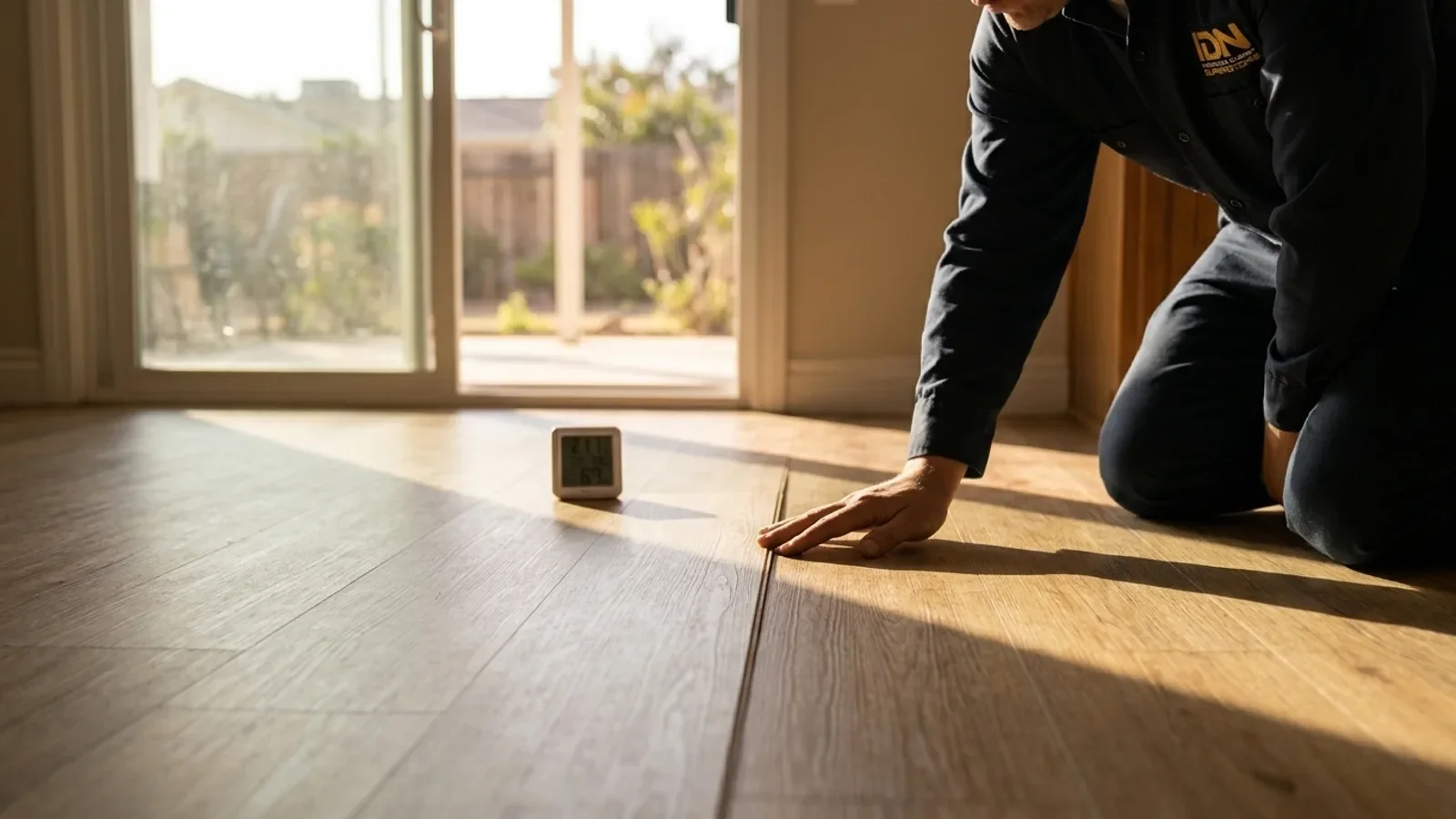
- Moisture. Concrete holds and releases water vapor. Laminate has a fiberboard core that doesn’t like it.
- Cleanliness. Old adhesive, paint drips and debris create high spots.
- Structure. On raised wood subfloors, loose or squeaky panels need attention first.
Skip these and the warranty may be at risk too. Most laminate warranties are written around the manufacturer’s prep requirements.
Slab foundations across the San Fernando Valley
Much of the San Fernando Valley sits on concrete slab foundations, and that shapes nearly every laminate job we do from Canoga Park outward. Ranch homes and tract neighborhoods built across the Valley’s postwar boom commonly went down on slab, and many still have the original concrete under carpet or old vinyl.
That brings a few local patterns. Older slabs often have hairline shrinkage cracks, and some show settling near patios or where additions were joined to the original house. Pull up carpet in a West Valley home and you’ll frequently find tack strip holes, glue residue from earlier floors, and low spots near sliding doors where water once tracked in.
Climate matters too. The Valley runs hot and dry much of the year, but irrigation along foundations, slab edges near planters, and the occasional winter storm can push moisture into concrete. Late fall into winter is when our rain usually arrives, so it’s a sensible time to check slabs near exterior doors and landscaped beds. Dry air on the surface doesn’t mean dry concrete underneath.
Hillside homes in parts of the Valley are a different story. Raised foundations with wood subfloors need a different prep approach, with attention to joists, panel fastening and any squeaks. If you’re not sure what’s under your current floor, we’ll tell you when we measure.
Moisture barriers on concrete: what goes down first
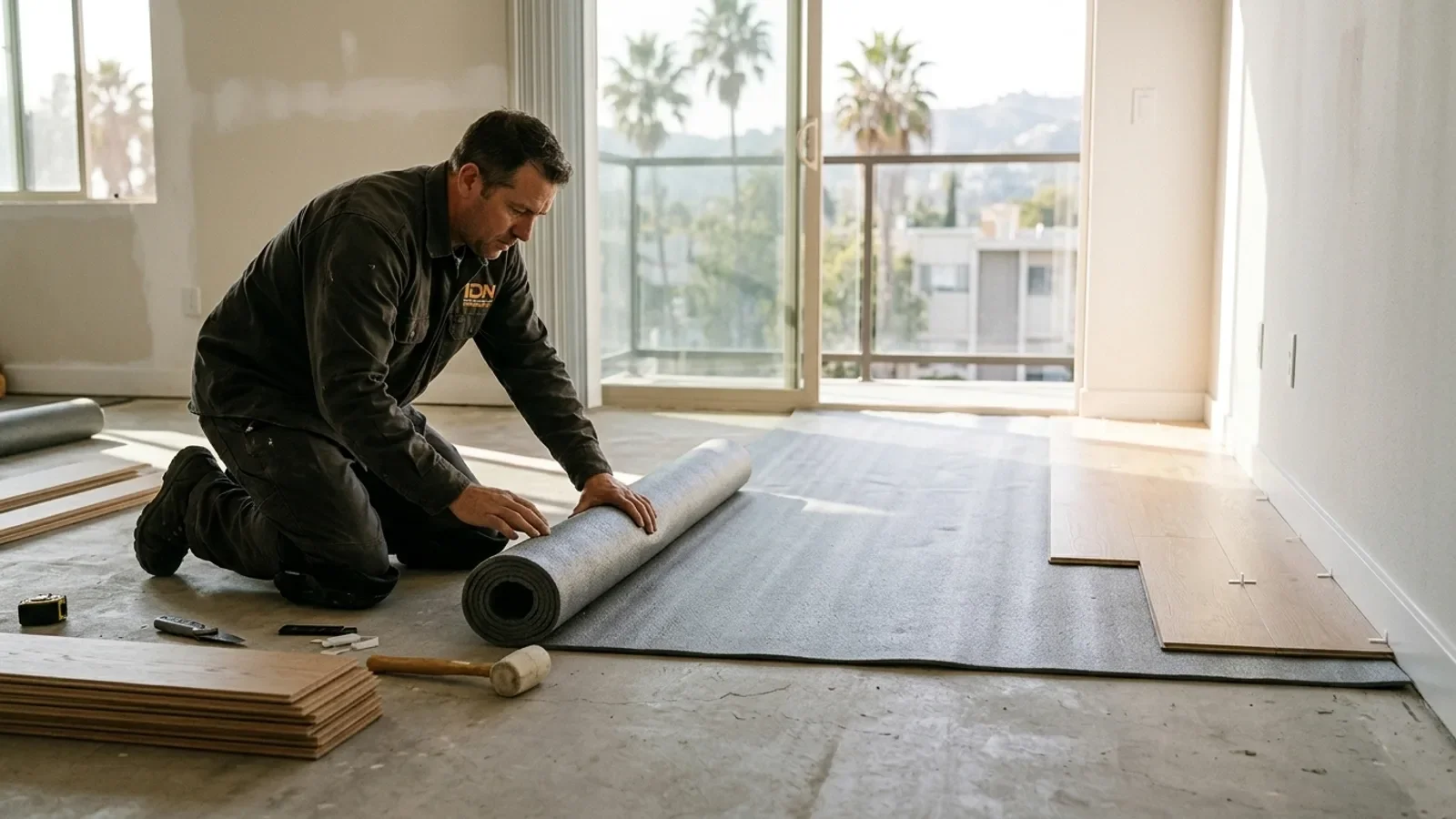
Over concrete, laminate needs a vapor barrier between the slab and the planks. That barrier is typically a polyethylene film, either a separate sheet or built into a combination underlayment.
Testing comes before the barrier. Moisture levels in concrete vary by slab age, location in the house and what’s happening outside, so we test rather than guess. For the details on how that’s done, see our guide to testing concrete moisture in Canoga Park homes.
A few points we’re firm about:
- Seams in the barrier get overlapped and taped, per the manufacturer’s directions.
- The film runs slightly up the wall behind where the baseboard will sit.
- If readings are high, we discuss options before installing anything. Laminate isn’t the right answer for every slab.
That last point matters. Sometimes the honest recommendation is a different product from our showroom, such as vinyl, that tolerates moisture better.
Choosing laminate flooring underlayment in the San Fernando Valley
The right underlayment depends on your subfloor, your building and how you want the floor to sound. It’s a bigger decision than most people expect, and it’s the one we get asked about most in the showroom.

Underlayment does three jobs. It softens the click-clack of footsteps. It adds some cushion underfoot. It bridges very minor surface texture (it does not fix real dips). Some products also include the moisture barrier, which simplifies slab installs.
Here’s how the common types compare:
| Underlayment type | Built-in vapor barrier? | Sound performance | Best fit |
|---|---|---|---|
| Basic foam | Usually no | Modest | Wood subfloors, budget-minded rooms |
| Combination foam with film | Yes | Modest to good | Most Valley slab installs |
| Dense acoustic (rubber or high-density felt) | Varies by product | Strong, especially for impact noise | Condos, upstairs rooms, shared walls |
| Pre-attached pad on the plank | Sometimes | Varies by product | Simpler installs, when the maker allows it |
One caution. If your laminate already has a pad attached, stacking extra cushion beneath it can make the locking joints flex and fail. We follow the plank manufacturer’s guidance on what can go underneath.
In condos and townhomes, sound rules can decide the choice for you. Many associations set minimum ratings for flooring assemblies. Our article on HOA sound requirements for underlayment in Los Angeles walks through what to ask your board before you order. Requirements vary by building, so get your HOA’s rules in writing.
Subfloor leveling for laminate floors in Canoga Park
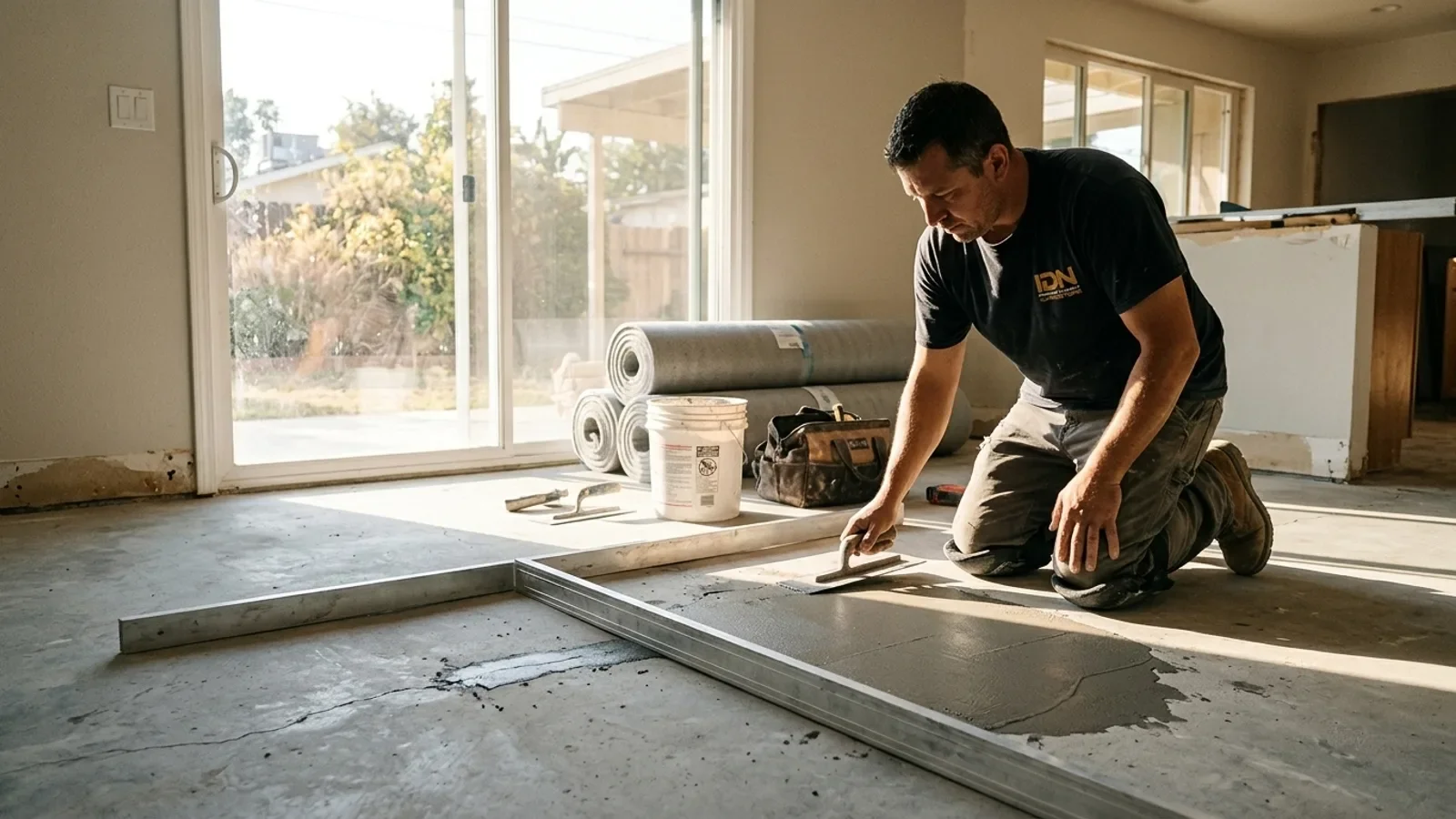
Leveling removes the dips and humps that make laminate bounce, click or separate. On slabs, that usually means grinding high spots and filling low spots with a patching or self-leveling compound.
Run a long straightedge across a typical older Valley slab and you’ll often see light under it in a few places. Near doorways. Along old wall lines from a remodel. Around where a heating duct or plumbing line was trenched.
Our prep usually follows this order:
- Remove the old flooring, tack strip and fasteners.
- Scrape adhesive and clean the slab.
- Check flatness across each room with a straightedge.
- Grind down high spots.
- Fill low spots and cracks with the appropriate compound and let it cure.
- Test moisture, then lay the barrier and underlayment.
Curing time is real time. Rushing compound before it’s ready can trap moisture under the floor. If you’re seeing warning signs in your current floor, our post on signs your Valley subfloor is uneven covers what to look for.
What shapes the cost of laminate installation in Los Angeles
The price of a laminate job is shaped mostly by prep, layout and the product you pick. Two homes with the same square footage can land in very different places.
The main drivers:
- Removal. Carpet comes up fast. Glued-down tile or sheet vinyl takes longer.
- Leveling. A flat slab needs little. A wavy one needs grinding and compound.
- Underlayment. Acoustic products cost more than basic foam.
- Layout. Hallways, closets, stairs and lots of doorways add cutting and trim.
- Transitions and baseboards. Reinstalling or replacing trim adds labor.
- The laminate itself. Thickness, wear layer and finish vary widely.
When you compare quotes, check that each one includes the same prep, underlayment and trim. A quote that leaves out leveling isn’t comparable to one that includes it. Our breakdown of what goes into a Valley laminate quote explains each line item. When you’re ready, you can book a laminate measure and consultation with our Canoga Park team.
How we handle laminate installs from our Canoga Park showroom
We handle product selection, prep and installation, so the person recommending the underlayment is working with the same plan as the crew installing it. That keeps the choices below the floor matched to the floor itself.
Start in the showroom. You can see laminate side by side with hardwood, engineered wood, vinyl and carpet, which helps when you’re deciding room by room. From there we measure, look at the subfloor, and recommend the barrier and underlayment for your home.
A laminate floor also does well in busy rooms. Its wear layer resists scratches from desk chairs and daily foot traffic, which is why it’s popular for home offices and family rooms. After install, care is simple. Our guide to caring for floating laminate covers cleaning and what to avoid.
Want a second look at your slab before you choose? Stop by the showroom or reach out to schedule a visit.
Frequently Asked Questions
What is the Rule of 3 for flooring?
It’s an informal design guideline suggesting you limit a home to about three flooring types or colors so spaces flow together. Many homeowners use it as a starting point, for example laminate in living areas, tile in wet rooms and carpet in bedrooms.
What is the downside to laminate flooring?
Laminate’s main weakness is water: standing moisture can swell its fiberboard core, and it can’t be refinished like hardwood. It can also sound hollow without a good underlayment, which is why prep and pad choice matter.
In what order do you lay laminate flooring?
Prepare and level the subfloor, lay the moisture barrier and underlayment, then install planks row by row from one wall, staggering end joints and leaving an expansion gap at the walls. Trim, transitions and baseboards go on last.
My laminate floor is lifting. What can I do to fix it?
Lifting usually points to moisture, a missing expansion gap, or an uneven subfloor, so the cause needs to be found before any repair. Wipe up any water, then have the floor inspected so affected planks can be lifted and the problem underneath corrected.
Ready to plan your floor?
The planks are what you see, but the slab, barrier and underlayment decide how long the floor stays quiet and tight. If you’re weighing laminate for a San Fernando Valley home, visit IDN Hardwood and Carpet Superstore in Canoga Park. We’ll look at your subfloor and help you pick what fits.